Video Bar

Loading...

Myth Versus Reality
Topics

Vedic / Indus Valley

Religion /Faith /Spirituality

Sanskrit / Prakrit / Pali

Tribes / People

Kannada / Telugu / Tulu

Konkani / Marathi / Saurastrian
Tamil / Malayalam
Sinhala
Indo-Europeon
Greek / Roman / Egypt

Others

Origin of Yavanas - Greek Myth

Yavanas are thought to have been Greeks by Western scholars tracing to Ionians . Is that so, Let us see the facts.

References to Yavanas in India
In Indian sources, the usage of the words "Yona", "Yauna", "Yonaka", "Yavana" or "Javana" etc. appears repeatedly, Let us see them in Detail

Edicts of Ashoka

Experts say in the Edicts of Ashoka (c. 250 BCE) especially In the Gandhari Rock XIII : Antiochus is referred as "Amtiyoko nama Yona-raja" (lit. "The Greek king by the name of Antiochus"), beyond whom live the four other kings: "param ca tena Atiyokena cature 4 rajani Turamaye nama Amtikini nama Maka nama Alikasudaro nama" (lit. "And beyond Antiochus, four kings by the name of Ptolemy, the name of Antigonos, the name of Magas, the name Alexander").

Dipavamsa , Mahavamsa and Sasanvamsa
Buddhist texts such as the Dipavamsa, Mahavamsa and the Sasanavamsa reveal that after the Third Buddhist Council, the elder (thera) Mahárakkhita was sent to the Yona country and he preached Dharma among the Yonas and the Kambojas.

Milindapanha

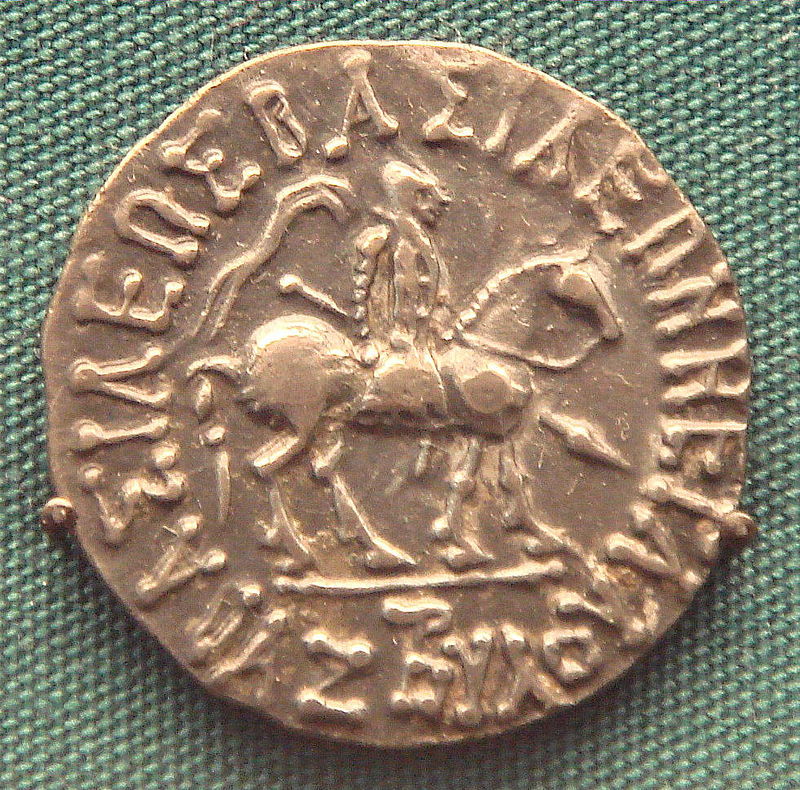
Another example is that of the Milinda Panha , where "Yonaka" is used to refer to king Menanders (160–135 BCE ) guards.

Mahabharata

The Vanaparava of Mahabharata contains verses in the form of prophecy complaining that "......Mlechha (barbaric) kings of the Shakas, Yavanas, Kambojas, Bahlikas etc. shall rule the earth (i.e India) un-righteously in Kaliyuga..." . This reference apparently alludes to chaotic political scenario following the collapse of dharmic dynasties in northern India and its subsequent occupation by non-dharmic hordes of the Yavanas, Kambojas, Sakas and Pahlavas etc.

Others
other Indian records describe the Yavana attacks on Saketa, Panchala, Mathura and Pataliputra, probably against the Sunga empire, and possibly in defense of Buddhism. The main mentions of the invasion are those by Patanjali around 150 BCE, and of the Yuga Purana, which, like the Mahabharata, also describes Indian historical events in the form of a prophecy:

Yavana in other cultures.
  • Egyptians used the word j-w-n(-n)-’
  • Assyrians used the word Iawanu
  • Persians used the word Yauna or Yavanu
  • Sri Lankans - used the word Yona in Mahawamsa and other historic texts.
  • In Biblical writings, the word was Yāvān (and still is, in modern Israeli Hebrew - יוון)
  • In Arabic and Turkish it is Yunan See Also Sanskrit Yoni
So what is the problem in telling Yavana are Greek, Let us analyze.


Not Greeks
Greeks coming to Yavana Janapada (republic) in NorthWest(Not Bactria perhaps Khandahar) became Yavanas. There is never a Greek Ionia in the east , which is neither stated in Persian inscriptions, nor by Herodotus.

Yavanas of King Bhagadatta in the Mahabharata are placed in south/south west(present Karnataka / Maharastra) India before the Yadu migration scene to Dvaraka. It would not make sense for Yadus to migrate to the west if Yavanas at attacked Mathura from the same west.

During Panini dated 600BC , there is no Greeks in India Neibhourhood , so the question of Panini referring to Greeks as Yavanas does not arise.

The date for Krishna are 3100BC. So, it is less likely to be that Yavanas are the Greeks. Because Greeks or Ionians were not there before 300BC.

There are three words distinct used Yuana before 400BC , Yavana between 400BC to 200BC and After 200BC as Yona in Pali texts. Sometimes both Yavana and Yona are mentioned.

Antigonos, Magas, Alexander are more Greek than Antiochus(Syria), but only Antiochous is mentioned as yona raja ,which shows yona does not mean Greek.

Kala-yavana, the "Dark Yavana" of the Mahabharata, who fought with Duryodhana. While in India dark always refer to evil mentality, it is possible this Dark-Yavana is of dark complexion, and perhaps pertaining to south India.

And when Greek were in India, they were based out of Egypt rather than Greece.

Yavanas are Indians
Literature shows them Indians.

The first (attested) Greek to be connected with the word Yon a is Antioch us in ca. 250 BCE. He is called Yona-raja = king over Yona people and their Janapada. His 4 Greek collegues are simply called Raja.

Indo-Greek Menander in the Milindapanha. In that work he is simply called Raja, king of Yona country (Yonanam). But his 500 elite soldiers, mercenaries from Yonanam, are called Yonakas.

Indo-Greek Antialcidas. He is called simply Maharaja, but it is Heliodora, son of Diya, who is the Vaishnavite Yona and ambassador to king Bhagabhadra.


Also contrast the clear Greek names of Greeks and Indo-Greek kings and those of the Yonas: Yavanaraja Tushaspha. Heliodorus’ may have adopted a Greek name under influence of the powerful status of the Indo-Greeks ruling over Yona country up to Taxila. The Mili ndapanha has these names for Yonas: Anantakâya (Yonako), Devamantiya (Yonako), Mankura (Yonako) and Sabbadinna or Dinna (Yonako).

It knows the Yonakâ as tribe., and Saka-yavana as the countries (Seistan-Arachosia/Quetta. Compare with Shaka-yavana of Patanjali. Shakas are attested before the Scythian invasion of the 1st century BCE in the NW).

“A vast body of Kharoshthl inscriptions found at several sites in the north-western region of the sub-continent are not much help either The term Yavana seldom occurs in these records, dated to the first few centuries of the Christian era, but the names of the donors are undoubtedly of Greek origin.” Ray adds: “The Swat relic vase inscription of the first century B.C. records the establishment of the relics of the Sakyamunl by Theodoros, … An engraved stone from Bajaur, south-east of Jalalabad, reads "of king Theodamas". .. The Kaldarra inscription records the laying of a tank by Thaidora or Theodoros, the Datiaputra”. But when Yavana is applied, see what Ray says: “ …Karle 314 and date from the first century A.D , the donors have Indian names such as Dhamadhaya, Chulayakha, Sihadhaya and Yasavadhana.

At Nasik cave XVII (dated after 110 A.D ), Indragnidatta, son of Dhammadeva the Yavana..” Indo-Greeks seem to retain their Greek names, but it is the Yonas who adopt names from other
cultures, the vaste majority being Indic (or some persian, and a few Greek, like the name Heliodorus).
The Puranas make them decendants of the Turvashas, peoples of South- Western India (karnataka / maharastra).

Literature shows Yavanas are becoming degraded Kshatriyas speaking in a dialect form (Mleccha), once having a better position and not at all being treated as foreigners.

Yavanas of King Bhagadatta in the Mahabharata are placed in south/southwest India before the Yadu migration scene to Dvaraka.

Panini refers to the Yavanas around 600BC, or perhaps earlier. They appear to be related to the Kambojas, since he mentions they both were condemned to shave their heads. This shows that the Yavanas were people that shaved their heads.


Famed Yavanacharya, the great Yavana-astrologer who studied Vedic astrology. In Takshashila, in North Western India, which had existed from 700BC , also attracted students from all over the world, so the scholar tells us. But again 700BC, No greeks in India.

Here however, we see that Yavana is a term that began in India itself, for the Vedic Aryans themselves - not foreigners! But, they do appear as peoples related to ancient Indians, or Vedic Indians - which predates the Greeks.

Gautama Dharmasutra , which refers to Yavanas as a mixture of Kshatriya father and Shudra mother

The Yavana kings in the Mahabharata are called: Yavana (ancient great kings), Chanura Devarata (mentioned with a Bhoja and Kirata king, showing that these were ruling in the east, south and of course Chanura in the west), Sumitra (rules in Sauvira country in the west. Battle with Pandu), Bhagadatta (rules in the west. Old friend of Pandu), Kasherumat (Battle with

Krshna. Probable direct predecessor of Kalayavana), Kalayavana Garg ya (mentioned as king of western India. Battle with Krshna). These names are Indian, not Foreign.

Dharma of Yavanas
yavanâH kirâtâ gândhârâśh cînâH śhabarabarbarâH | śhakâs tuSHârâH kahvâśh ca pahlavâśh cândhramadrakâH oDrâH pulindā ramaTHâH kâcā mlecchâśh ca sarvaśhaH | brahmakSHatraprasûtâśh ca vaiśhyâH śhûdrâśh ca mânavâH

ie.'What duties should be performed collectively by the Yavana, Kirata, Gandhara, Cina (ishwa: Shina), Shabara, Barbara, Shaka, Tushara (ishwa: high mountaineer), Kahvas (var. Kanka), Pahlava, Andhra, Madraka, Odra (var. Paundra), Pulinda, Ramatha and Mleccha (var. Kamboja) Vaishyas and Shudras and offshoots of Brahma-Kshatras, (all these) Manavas?

The Duties to be performed by Kshatriayas are
  1. serve their mothers and fathers, their preceptors and other seniors, and recluses living in the woods.
  2. serve their kings.
  3. follow duties and rites inculcated in the Vedas.
  4. perform sacrifices in honour of the Pitris, dig wells, give water to thirsty travellers, give away beds and make other seasonable presents unto Brahmanas.
  5. Abstention from injury, truth, suppression of wrath, supporting Brahmanas and kinsmen by giving them their dues, maintenance of wives and children, purity, peacefulness,
  6. making presents to Brahmanas at sacrifices of every kind, are duties that should be practised by every person of this class who desire his own prosperity. Such a person should also perform all kinds of Paka-yajnas with costly presents of food and wealth.

And it means t hat those who fail to follow the above dharma is Yuana So Yavanas are the Kshatriyas(Warrior Clans) who dont follow the law or dharma.

Yavana Indian Etymology
The word Yavana, if it is assumed to be Indian, can be derived in three ways. Firstly, from yu = 'keeping away', 'averting' (dveSHo yavana), signifying one who is disliked. Secon dly, from yu
'mixing, mingling',(i.e. Yauti mishrayati vaa mishriibhavati sarvattra jaatibhedaabhaavaat iti yavanah), implying a mixed people. Thirdly, from the meaning, 'quick', 'swift'; a swift horse, (i.e. Yavena gacchatiiti yavanah), denoting those who have a quick mode of conveyance. These derivations taken together may indicate that the Yavanas were thought of as a mixed
people, who had a quick mode of conveyance and who were disliked. However these derivations are recent. But Experts disagree on this meanings already.


“Firstly, from the yu = 'keeping away', 'averting' (dveSHo yavana), signifying one who is disliked.” The word doesn’t signify one who is disliked, but rather Yavana is the one who keeps away, he keeps a way the Dvesha or the enemy. Yavana here rather denotes a protector, a Kshatriya, thus someone who is liked and needed! This word Dvesho yavana is from the Vedic (!) Krshnayajurveda. Thus not a recent word, as it conjectures. More ancient, Vedic words from this root: dveSHo-yávana (MaitrS.) and mfn. removing hostility. dveSHo-yút (RV.), mfn. removing hostility. pra-yotR' m. a remover, expeller . Or Yaavan.

“Secondly, from yu 'mixing, mingling', (i.e. Yauti mishrayati vaa mishriibhavati sarvattra jaatibhedaabhaavaat iti yavanah), implying a mixed people.” , but these are the true meanings given to the root he has in mind: yu does not mean mixing, but “to unite, attach, harness, yoke, bind, fasten RV.(=yuj); to draw towards one's self, take hold or gain possession of, hold fast AV. TS. ShBr.; to push on towards (acc.) AV.; to confer or bestow upon (dat.), procure RV.; (yauti), to worship, honour Naigh. Iii,” (It is from this root that the Vedic Yaavan and A-yaavan are derived from for the halves of the moon..).

Thirdlyfrom an ancient root yu = to move quickly. There are more Vedic words from this root denoting to move (quickly): yaávan m. a rider horseman, invader, aggressor, foe R. (ifc.) going, driving, riding (cf. akSNa-, agra-, eka-y &c.) akSNa-yaávan mfn. going across agra-yaávan mfn. going before eka-yaávan m. of a king TBr. ii TâNDyaBr; RNa-yaávan mfn. relieving fro m debt or obligations praatar-yaaan “who moves at early morning” puro-yaavan “who moves foremost” sa-yaavan -"going along with, associated with,accompanying Thus, the words yáva speed, velocity (prob. w.r. for java); a double convex lens ib. [yava; {Gk.}; Lith. javaí.], yavana mfn. quick, swift; m. a swift horse L. (prob.w.r. for javana) and yavaana mfn. quick, swift L. (prob. w.r. for javaana), have all ancient Vedic roots.

Yavanas are Indigenous Tribe
The Yavanas are enumerated together with Pârashavas, Yavanas, Caranas, and Shûdras. None of the Varnas mentioned in IV.16-21 do refer to any foreigner, but rather of a mixture of indigenous Varnas and Jatis. Parashavas or connected with parashu or the axe of a woodcutter. As frontier people (paccantima) they became degenerated in the eyes of the immediately adjoining main land (majjhima). The pre-Alexandrian Ganapatha remembers Yavanas as Munda, unlike the hairdress of (Indo-)Greeks. The Majjhima Nikaya mentions that the Yonas call their varna Arya! Did the Greeks consider themselves as such? No refere nce to this with the Greaco-Roman historians


Compared to the doubtful etymologies for Ionian, the etymology of yavana is much better and logical. In Yavana we have a normal indigenous development of fusion of ideas and meanings which we can observe in many other words or ideas (aspects of Indra absorbed in Vishnu- Krshna, etc.etc.) Besides, all the different Indian works point to the indigenous character of Yavanas.

In short, Ionian as Yauna doesn't seem to have been known to Indians at all before Alexander. After Alexander, it does seem that the Indo-Greeks were rather known through the central country they were ruling over, which was Yona Janapada. And Yona Janapada can not be equated with Bactria, it is always within the subcontinent, close to the Indus area.

Yona-Kamboja- Gandhara is the frontier line of India from south to the north of the (western bank of the) Indus Valley: Yona -Baluchistan, Kamboja - Gomal/Bannu Valley, Ghandra - Kabul/Swat Valley.

Source
Rodney Lingham

YAVANAS ARE NOT GREEKS By Ishwa

Related Posts
Who are Kambojas
Myth of Alexander Victory in India
Dating Ancient Greek Civilization
Zarathustra
Date of Buddha
Topics

Date of Buddha

Most of us are taught that Buddha was born around 560 to 550 B.C. However, once we start doing some research, we find evidence that this date may be too late. Buddha may have lived much earlier. Let us see how Buddha is dated.

Let us see the Traditional Theories at arriving date of Buddha.

  1. Long chronology Based on the Mahavamsa and Dipavamsa accounts which state that 218 years difference between Buddha Death and Ashoka Conversion. Which put date of the Buddha’s death is 544/543 B.C.E.
  2. Corrected chronology According to Richard Gombrich, Aśoka’s dates are approximately established by the synchronism between his 13th major rock edict, which is dated by scholars in the 13th year after his consecration, and the five monarchs of the Hellenistic world named therein as reigning at the time. The date of the edict must be 255 B.C., give or take a year; Aśoka’s consecration is accordingly dated 268 B.C. So the Date of Buddha's Death is 483BC
  3. short chronology Many Sanskrit , Tibetan and chinese traditions say the difference between date of Asoka coronation and Date of Nirvana of Buddha to be 100 years and Chinese accounts say 116 years. So the date can be anywhere between 544BC to 440BC depending on which theory you are following.
  4. Dot-ted record. This account, taken from Chi-nese sources and referred to initially by Tao-hsüan in the Ta t’ang nei tien lu, argues that when Upāli, first collected the Vinaya after the Buddha’s death, he marked a dot in the manuscript at the end of the pavarana, and continued the process in each year thereafter. His successors, Dāsaka, Sonaka, Siggava, Moggali-putta, Tissa, Caṇḍavajji, and so forth continued the process. Samghabhadra, who presumably translated the Samantapāsādikā into Chinese, is said to have put the 975th dot on the manuscript during a visit to Canton in 489 C.E., thus establishing the Buddha’s death in 486 B.C.E.
But we are not bothered by this relative chronology based on the date of Ashoka cornation. Since we have seen that Ashoka grandfather chandragupta Maurya is itself is not based on Solid evidence the article Did Megasthanese Meet Chandrgupta. We will go to the root of the evidences to see when he can be dated.

European Account
Since the records of ancient India give only the intervals between events but do not, like later records, date the events themselves, it is necessary in order to establish dates in Indian history to call on Greek historians. Indo-Greek relations developed as a result of the Indian campaign of Alexander the Great (327 BC). About 303 BC, the Indian Emperor Candragupta came to a territorial agreement and entered into diplomatic relations with Seleukos Nikator, Alexander's former general who ruled over Babylonia. Through the reports of the Greek ambassador Megasthenes, who was ambassador to the imperial court of palimbothra , Candragupta ( Sandrokottos ) became known to Greek historians, and through them we are able to date his accession to 321 BC. But this date is now disputed due to various reasons, Further Information on Chandgragupta and Alexander Date follow article Did Megasthanese meet Chandragupta Maurya. How Let us see

Purana Account
The Puranas provide a chronology of the Magadha rulers from the time of the Mahabharata war, Somadhi (Marjari) was the ruler. He started a dynasty that included 22 kings that spread over 1006 years.They were followed by five rulers of the Pradyota dynasty that lasted over 138 years. Then for the next 360years was the 10 rulers of the Shishunag family. Kshemajit (who ruled from 1892 to 1852 B.C.) was the fourth in the Shishunag dynasty, and was a contemporary of Lord Buddha's father, Shuddhodana. It was during this period in which Buddha was born. It was during the reign of Bimbisara, the fifth Shishunaga ruler (1852-1814 B.C.), when Prince Siddhartha became the enlightened Buddha. Then it was during the reign of King Ajatashatru (1814-1787 B.C.) when Buddha left this world. Thus, he was born in 1887 B.C., renounced the world in 1858 B.C., and died in 1807 B.C. according to this analysis.

Further evidence that helps corroborate this is provided in The Age of Buddha, Milinda and King Amtiyoka and Yuga Purana, by Pandit Kota Venkatachalam. He also describes that it is from the Puranas, especially the Bhagavat Purana and the Kaliyurajavruttanta, that need to be consulted for the description of the Magadha royal dynasties to determine the date of Lord Buddha. Buddha was the 23rd in the Ikshvaku lineage, and was a contemporary of Kshemajita, Bimbisara, and Ajatashatru, as described above. Buddha was 72 years old in 1814 B.C. when the coronation of Ajatashatru took place. Thus, the date of Buddha's birth must have been near 1887 B.C., and his death in 1807 B.C. if he lived for 80 years

Professor K. Srinivasaraghavan also relates in his book, Chronology of Ancient Bharat , that the time of Buddha should be about 1259 years after the Mahabharata war, which should make it around 1880 B.C. if the war was in 3138 B.C.

Astronomical Account
A search was made from 1900 BCE to 400 BCE for the sequence of events: winter solstice, lunar eclipse, solar eclipse, followed by Vaisakha poornima, the full moon day of Buddha nirvana. It is found that there are only 14 dates possible for this sequence of events to occur:1807 BCE, 1694 BCE, 1659 BCE, 1510 BCE, 1250 BCE, 1192 BCE, 1138 BCE, 1119 BCE, 1062 BCE, 1007 BCE, 765 BCE, 690 BCE and 560 BCE. If a time limit of about three months (the time that Buddha spends in sravasti before attaining his nirvana) is imposed, then the time intervalbetween winter solstice and vaisakha poornima must be less than 90 days and that vaisakha poornima should occur before the vernal equinox, as winter solstice occurred after his arrival at sravasti. With this restriction, most of the dates do not qualify, leaving only two dates 1807 BCE and 1510 BCE as possible dates. It is interesting to note that the ‘traditionally’ accepted dates, 544 BCE, or 483 BCE, or any of the recently revised dates do not fit the picture. One additional piece of astronomical information is needed to fix the date.

The Samyutta Nikaya , Part I, sugatta Vagga, Book II, Chapter I, Devaputtasa yuttam,suttas contain ten units in all, two of them to relate to kassapa. The others are devaputtas who visit Buddha. Sengupta identifies kassapa with prajapati and hence with winter solstice. He regards the other deities as adityas The first devaputta to visit is to be taken as the lord of the month of the lunar eclipse. We take a hint from a listing of the sons of aditi in taittirya aranyaka dhata aryaman. If we assume as Sengupta did, kassapa as dhataa or prajapati, his visit would indicate the arrival of winter solstice. Aryaman would be the first ‘devaputta’ to visit as the deity of the month, i.e., the presiding deity of the nakshatra of the full moon, where the lunar eclipse occurs. In 1510 BCE the lunar eclipse occurs at uttaraphalguni, whose deity is bhaga. In 1807 BCE, the lunar eclipse occurs at purvaphalguni , with aryaman as the deity. So the year is 1807 BCE

Furthermore, astronomical calculations by astronomer Swami Sakhyananda indicates that the time of the Buddha was in the Kruttika period, between 2621-1661 B.C.

Pali and Ceylon Chronicles
Mahavamsa and Dipavamsa , give the traditional figure of 218 years between the death of the Buddha and the conversion of Asoka is best taken as conventional. It amounts to the claim that between the death of the Buddha and the conversion of Asoka, there intervened
  • A first major event occuring after 100 years, this being the standard conventional interval of prediction in the later Buddhist literature
  • A second major event, occurring after another 100 years, this event being the rise of the ruler patron, or the coronation of Asoka.
  • A third event, occurring after a further 18 years. We may note that according to his own inscriptions, it was in the 18th year of his reign that Asoka was persuaded to accept Buddhism.
The alternative interval of 256 years, is based on counting backward from a later date in Asoka's reign, namely, the year of his abdication to pursue a life of virtue. This is the information given by the chronicles , the western scholars have taken the difference in years between ashoka , buddha and Megasthanese – Chandragupta meeting to date Buddha.

The Ceylonese Pali traditions leave out the kings mentioned RockEdicts from list of Asoka’s kingdoms, whereas Rock Edict XIII includes them. In fact, as many scholars have noted, the character of Asoka from Ceylonese and other traditions is precisely (as RK Mukherjee has said) what does not appear in the principal edicts. Rock Edict XIII, the famous Kalinga edict, is identified as Asoka’s. It was, however, Samudragupta’s (Samudragupta was a great conqueror and a devout admirer of Asoka. He imitated Asoka in many ways and also took the name Asokaditya. In his later life, he became a sanyasi).

Tibet Account
The Kalachakra tantra puts the life of Sakyamuni Buddha in the 9th. Century BCE William Jones, on the basis of Tibetan records infers that Buddha lived in the 11th century B.C. A number of Tibetan documents place Buddha at 2100 BC.


China Account

Fa-hsien was in India and at Patliputra c. 410 AD. He mentions a number of kings, but makes not even a fleeting reference to the Gupta, even though according to European scholars he came during the height of their reign. Fa-Hien puts Buddha’s Nirvana at 1050 B.C.

Qin Shi Huang, who is said to have suppressed Buddhism, in the same way that he suppressed all other Chinese philosophy. His reign lasted from 246 BCE to 221 BCE. Han Wei, a noted researcher from the Shaanxi Provincial Institute of Archaeology, found evidence in the Historical Records, which were written in 104 BC. Silk Road archaeologist WANG Jianxin said Han's research sounded "reasonable" .

The Weilüe reports a tradition that an envoy of the Yuezhi king who gave oral teachings on Buddhist sutras to a student in 2 BCE

Greek Accounts
Seven Sages of Greece (Dated 620-550 B.C ) surprisingly give the Buddhist Teachings.

Thyagaraja Aiyer in his book "Indian Architecture" observes," Here lies Indian Sramanacharya from Bodh Gaya, a Buddhist monk taken to Greece by his Greek pupils and the tomb marks his death about 1000 B.C." If the Buddhist monk went to Greece in 1000 B.C., then the Buddha must have lived at least a few centuries earlier.

Somayajulu places Chandragupta Maurya in the 14th century B.C. This puts the Buddha three centuries earlier, i.e., in the 17th century B.C.

Long before the word 'missionary' came to be synonymous with Christianity" Buddhist monks ('dharma-bhanakas') were traipsing across Asia. Travelling the Silk and Spice Routes they spread their doctrines all the way from Khotan in central Asia to Antioch and Alexandria in the west. One such visit is documented in 20 BC in Athens. A Buddhist philosopher, Zarmarus, part of an embassy from India, made a doctrinal point by setting himself alight. His tomb became a tourist attraction and is mentioned by several historians.

It seems the original Therapeutae were sent on an Indian embassy to Pharaoh Ptolemy II in 250 BC. The word 'Therapeutae' is itself of Buddhist origin, being a Hellenization of the Pali 'Thera-putta' (literally 'son of the elder.') Philo Judaeus, a 1st century AD contemporary of Josephus, described the Therapeutae in his tract 'De Vita Contemplativa'. It appears they were a religious brotherhood without precedent in the Jewish world. Reclusive ascetics, devoted to poverty, celibacy, good deeds and compassion, they were just like Buddhist monks in fact. From the Therapeutae it is quite possible a Buddhist influence spread to both the Essenes (a similar monkish order in Palestine).

Gnosticism is Influenced by Buddhism , which was a religion of quite a different order to earlier 'pagan' cults. It was a scriptural religion, making a strong appeal to the emotions. It offered a moral code – and hope. The Gnostic idea of liberating the soul from entrapment in matter is not dissimilar to the teachings embodied in the "4 Noble Truths" of the Buddha.The Greek details presented above are also sometimes dated before Alexander, so the argument that Buddhism came to Greece only after Alexander invasion does not hold water. Greek and some parts of then India like Bactria were part of Persian empire of Darius, so the exchange of ideas is not confined to Alexander era.

Korea Account
Hwanin or Divine Regent is a figure in Korean mythology. Hwanin is an alias of Indra. Hwanin is the name on Buddhism of Indra, this name is widely used in east Asia. We have evidences that Hwanin being used in 3rd Century BC in Korea.

South East Asia Traditions

Japan, Thailand, , Burma, Cambodia, Laos, Vietnam, Indonesia follow the Ceylon (Sri Lanka) date.

Christian Account
Apart from similarities between buddha and Jesus Christ, Most Important account has been the Barlaam and Josaphat story, which is the Christianized version of Buddha Story.

Max Muller stated that missionaries also were sent more than thirty years prior to Ashoka's reign

Philo noted the presence of Buddhists in Alexandria, Egypt.

Conclusion
The above accounts say that Buddha can be earlier than the said dates of 560BC and Western and Indology Scholars have not even explained the contradictions in their own calculations. The fundamental sheet Anchor theory (Megasthanese -Chandragupta Meeting) is itself not established. The Indian literary accounts are being dismissed summarily. And Western scholars themselves dont provide any evidence to backup their account. Since Chandragupta Maurya date by Western and Indology scholars is disputable, Buddha Date is also susequently disputable. Regarding what is being said in Ashoka Edicts and what are the claims made on the edicts , we will see in another article. For now Buddha date is nowhere settled. Date by Indian Literary sources and Astronomical calculations is 1807 BC.

Source
  • The Date of the Buddha by E Bruce Brooks
  • Re-establishing the Date of Lord Buddha by Stephen Knapp
  • A short note on the date of Buddha nirvana using planetarium software B. N. Narahari Achar
  • Indian Architecture by Thyagaraja Aiyer
  • Cooking the Buddhist Books by Charles S. Prebish

Did Megasthenes Meet Chandragupta Maurya

I got a comment on the post Dating Indian History by one GD Prasad , who claimed that to see the correct Indian History refer to Purana date, which I dismissed it as there was nothing to backup the comment. But curiously he said that the Chandragupta at the time of Alexander was of Gupta Dynasty not Maurya Dynasty. Now that worm has entered my head, After Googling much I am writing this article. Since this is the date that determines the entire Indian history is based on, we have to identify correctly who was the Chandragupta at the time of Alexander who met Megasthenes. Chandragupta Maurya is Indian King who renounced his empire and became jain monk , he went to Shravanbelagola in karnataka and died as simple man.

Megasthenes story

Megasthenes was the Greek ambassador sent by Seleucus Nicator in c. 302 B.C. to the court of the Indian king whom he and the Greek called "Sandrocottus". He was stationed in "Palimbothra", the capital city of the kingdom. It is not clear how many years Megasthenes stayed in India, but he did write an account of his stay, titled Indika. The manuscript Indika is lost, and there is no copy of it available. However, during the time it was available, many other Greek writers quoted passages from it in their own works. These quotations were meticulously collected by Dr. Schwanbeck in the nineteenth century, and this compilation is also available to us in English (J.M. McCrindle: Ancient India as Described by Megasthenes and Arrian). When European Indologists were groping to date Indian history during the nineteenth century (after having arbitrarily rejected the various Puranas), the Megasthenes account came in very useful.

How Chandragupta Maurya was Equated with Sandrocottus – Sheet Anchor Chronology.

Sir William Jones could not believe in the antiquity of the Bharata War according to Indian accounts because of his Christian faith which told him that Creation took place at 9-00 a. m, on 23rd October 4004 BC. He tried to search the Greek and Roman accounts. These accounts supplied some information about India of the time of the Macedonian king Alexander. It mentioned seven names of three successive Indian kings. Attributing one name each for the three kings the names are Xandrammes, Sandrocottus and Sandrocyptus. Xandrammes of the previous dynasty was murdered by Sandrokottas whose son was Sandrocyptus.


Jones picked up one of these three names, namely, Sandrokottas and found that it had a sort of phonetic similarity with the name Chandragupta of the Puranic accounts. According to the Greek accounts, Palibothra was the capital of Sandrokottas. Jones took Palibothra as a Greek pronunciation of Pataliputra, the Indian city and capital of Chandragupta. He, then, declared that Sandrokottas of the Greek accounts is Chandragupta Maurya of the Puranas. Jones died just a year after this declaration and possibly before his death, could not know that Puranas have another Chandragupta of the Gupta dynasty.

Later scholars took this identity of Sandrokottas with Chandragupta Maurya as proved and carried on further research. James Princep, an employee of the East India Company, deciphered the Brahmi script and was able to read the inscriptions of Piyadassana. Turnour, another employee of the Company in Ceylon, found in the Ceylonese chronicles that Piyadassana was used as a surname of Asoka, the grandson of Chandragupta Maurya. The inscription bearing the name of Asoka was not found till the time of Turnour. In 1838, Princep found five names of the Yona kings in Asoka's inscriptions and identified them as the five Greek kings near Greece belonging to third century BC who were contemporary to Asoka.

In the Greek accounts, Sandrokottas of Palimbothra is described as a contemporary of Alexander of Macedonia who invaded India during 327 BC to 323 BC This decides the approximate date of Chandragupta Maurya. Princep's research decides the approximate date of Asoka, the grandson of Chandragupta Maurya as in 3rd century BC Both these dates were adjusted with the reign periods of the three successive Magadha kings, Chandragupta, Bindusara and Asoka of the Maurya dynasty given in the Puranas. Thus, the date c. 320 BC was fixed as the date of coronation of Chandragupta Maurya. It is on this date that every other date of Indian history has been constructed.

Max Mueller, in 1859 AD, finalized this identity of Sandrokottas with Chandragupta Maurya and declared c. 320 BC, the date of coronation of Chandragupta Maurya as the Sheet Anchor of Indian history. M. Troyer did not agree with this conclusion and noted this fact in the introduction to his translation of Rajatarangani of Kalhana. He even communicated his views to Prof. Max Mueller in a letter but did not receive a reply from him.
Smith's Chronology:
Historian V. A. Smith took the chronological identity asserted by the predecessors in this historical hierarchy as the basis for further calculation of the exact dates of the different dynasties that ruled over Magadha after and before the Mauryas. He took the aid of numismatics in addition to epigraphy. He could not however get over, as if by compunction, to follow the Puranas in the enumeration of the kings and their dynasties. But he reduced their reign periods. The total reduction done by these British scholars, from Jones to Smith, comes to 1300 years according to some Indian chronologists.

Indian View Chandragupta Maurya did not meet Megasthenes
  1. Megasthenes has nowhere mentioned the word Maurya

  2. He makes absolutely no mention of a person called either Chanakya or Kautilya.

  3. Indian historians have recorded two Chandr aguptas, one of the Maurya dynasty and another of the Gupta dynasty. Both of them had a grandson called Ashoka. While the Mauryan Chandragupta' s son was called Bimbasara (sometimes Bindusara), The Gupta Chandragupta had a son called Samudragupta. Interestingly Megasthenese has written that Sandrakuttos had a son called Samdrakyptos, which is phonetically nearer to Samudragupta and not Bindusara.

  4. The king lists given by the Puranas say that 1500 years elapsed from the time of the Kurukshetra war to the beginning of the Nanda dynasty's rule. If one assumes the Nandas' period to be 5th century BCE, this would put the Bharatha war around 1900 BCE whereas the traditional view has always been 3100 BCE. This gives a difference of 1200 years which go unaccounted.

  5. Megasthanese himself says 137 generations of kings have come and gone between Krishna and Sandrakuttos, whereas the puranas give around 83 generations only between Jarasandha's son (Krishna's contemporary) to the Nandas of the Magadha kingdom.. Assuming an average of 20 to 25 years per generation, the difference of 54 generations would account for the gap of the 1200 years till the time of Alexander.

  1. The Chinese have always maintained that Buddhism came to China from India around 1100 -1200 BCE, whereas the western historians tend to put Buddha at 500 BCE

  2. According to the Greek accounts, Xandrammes was deposed by Sandrokottas and Sandrocyptus was the son of Sandrokottas. In the case of Chandragupta Maurya, he had opposed Dhanananda of the Nanda dynasty and the name of his son was Bindusara. Both these names, Dhanananda and Bindusara, have no phonetic similarity with the names Xandrammes and Sandrocyptus of the Greek accounts.

  1. Asoka's empire was bigger than that of Chandragupta Maurya and he had sent missionaries to the so-called Yavana countries. But both of them are not mentioned. Colebrook has pointed out that the Greek writers did not say anything about the Buddhist Bhikkus though that was the flourishing religion of that time with the royal patronage of Asoka. Roychaudhari also wonders why the Greek accounts are silent on Buddhism.

  1. The empire of Chandragupta was known as Magadha empire. It had a long history even at the time of Chandragupta Maurya. In Indian literature, this powerful empire is amply described by this name but it is absent in the Greek accounts. It is difficult to understand as to why Megasthanese did not use this name and instead used the word Prassi which has no equivalent or counterpart in Indian accounts.

  1. To decide as to whether Pataliputra was the capital of the Mauryas, Puranas is the only source. Puranas inform us that all the eight dynasties that ruled Magadha after the Mahabharata War had Girivraja as their capital. Mauryas are listed as one of the eight dynasties. The name Pataliputra is not even hinted at, anywhere in the Puranas.

No Concrete Proofs:
The Western scholars and their followers in India have been all along insisting on concrete evidence for ancient Indian chronology but they themselves have not been able as yet, to furnish any such evidence for the sheet anchor.

All the evidence supplied so far is conjectural. No numismatic or inscriptional proof is available for the date. Same was the condition at the time of V. A. Smith. He had written, "Unfortunately, no monuments have been discovered which can be referred with certainty to tile period of Chandragupta Maurya and the archaeologist is unable to bring any tangible evidence afforded by excavations."

Pandit Bhagavaddatta seems to have studied the fragments of Megasthenes in more detail than those who decided the identity. On the basis of Megasthenes's statements, he has arrived at the following conclusions. "Yamuna was flowing through Palibotha i.e., Paribhadra, the capital of the Prassi kingdom. Palibothra was 200 miles from Prayaga on way to Mathura. The kshatriyas there were known as Prabhadrakas or Paribhadrakas. Their king was Chandraketu. The capital Paribhadra was near to Sindhu-Pulinda which is in Madhya Desha and is today termed as Kali-Sindha. The Karusha Sarovara was between Sindhu-Pulinda and Prayaga." He further states, "Pataliputra cannot be written as Palibothra in Greek because 'P', in Patali is written in Greek as English 'P', only ; then why 'P', in Putra is changed to 'B', in Greek? There is no instance where Sanskrit 'P', is changed to Greek 'B'." Putra cannot be Bothra.


Conclusion
Based on all these, I would say the Sandrakuttos of Megasthanese was not Chandragupta Maurya. As far as Chandragupta of Gupta Dynasty meeting Megasthenes , we will see in another Article.

Source
  • Defalsification of Indian history By Dr. Subramanian Swamy
  • Bharateeya Historiography by Sriram Sathe


Myths of Kanchi kamakoti Peetam

If you have ever gone to to websites of Kanchi Komakoti Peetam or Wiki or websites related to Kanchi Mutt you will come across the following claims and much more. We will see the following claims.

Claims made

  • Shankara established the Kanchi mutt
  • Kumbakonam mutt is branch of Kanchi mutt
  • Kanchi Mutt is 2500 years old
  • Adi Shankara spent last days of his life in Kanchi mutt He is buried in the premises of the mutt
  • Kanchi mutt was established as the controlling centre of other mutts.
  • Suresvara was appointed as the successor to Shankara at Kanchi mutt.
  • Kanchi mutt was shifted to Kumbakonam in 18th century AD due to opposition from the Local kings in Kanchi
Is Kanchi Mutt 2500 years old?
First we have to fix the date of Adi Shankara to know the date of Kanchi mutt as it is claimed to have been established by him. Date of Shankara , We have already seen in another article about dating Shri Adi Shankara. His date is fixed to 8th century AD not 500BC as claimed by Kanchi Mutt. So the question of Kanchi Mutt being 2500 years old do not arise.

No Tamil or Sanskrit literature before 19th century Speaks of Kanchi Mutt , which shows there was no mutt during that period.

Did Adi Shankara established Kanchi Mutt?
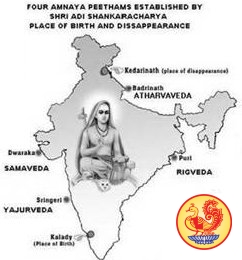
Every other Mutt or religious work mentioning Shankara have told there are only four mutts established by Shankara , independent of the other. Each mutt was allotted Upanishads to focus on

Saraswati, Bharati and Puri -------------Shringeri (South)
Tirtha and Ashrama-----------------------Dwarka (West)

Giri, Parvata and Sagara-----------------Jyotir (North)

Vanam and Aranyam----------------------Govardhan (East)


Except Kanchi Mutt and its associates all the Other mutts say that Shankara died in Himalayas. His final days are said like this: Setting off from the Jyotir Ashram (Badrinath) in the Himalayan he headed toward the nearby Mountainous region of Kedarnath, the place that was destined to be his final resting place. His four chief disciples accompanied him part of the way, but then Shankara insisted they go no further as the final part of his journey was to be completed alone.

Kanchi Mutt Chronicles , claim that Adi Sankaracharya had spent the last days of his life in Kanchipuram where he attained samadhi, and not in the Himalayas as is generally believed. A mandapam named after the father of the school of advaita philosophy, seen in the Kamakshi temple premises, is cited as his samadhi. It was originally called `Sankaracharya samadhi', but when it was pointed out there could not be a samadhi inside a Devi temple, the mandapam was renamed `Sankaracharya sannidhi' - sanctum, not a tomb.

So we can see that the Shankara cannot have come to kanchi in the final moments of his life and established the Kanchi mutt.

Kumbakonam mutt is branch of Kanchi mutt
According to the Kanchi chronicles, the math in Kanchipuram had to be shifted in the 18th century AD, in the face of opposition from local kings and hence the shift to Kumbhakonam. (One does not know of any Hindu-hating king near Kanchipuram from the 18th century.)

"Historians, however, hold that the Kumbhakonam math is a branch of the Sringeri math established in 1821 AD by the famous Maratha monarch of Tanjore, Pratap Singh Tuljaji. It is the date of the oldest inscription found in the Kumbhakonam math building. The Inscription is in Kannada. The math refers itself as sarada math. The diety of Sringeri mutt. If the mutt has anything to do with kanchi, it should have been diety kamakshi , the goddess of kanchi not sarada. Kumbakonam Mutt Independence Kumbhakonam math proclaimed independence from Sringeri and established itself as the " Kamakoti peetham.". In addition to denying the historical truth of its origin as a branch of the Sringeri math, the story propagated was that it was originally established by Adi Sankaracharya himself at Kanchipuram, with control over the recognized four maths. Worse, a wholly fictitious story that Adi Sankaracharya ascended a sarvagna-pitha at Kanchi and attained samadhi at Kanchi is propagated as "tradition." The real problem though was that in the course of this campaign, someone with more enthusiasm than scholarship, "fixed" the date of Adi Sankaracharya as 477 B.C. and wrote up a continuous list of gurus of the math from 477 B.C. to the present! This guru parampara is filled with names of sannyasis taken at random, with no thought to chronology.

Kanchi Mutt origin
In 1839 AD, the head of the Kumbhakonam math applied for permission to the English Collector to perform the kumbhabhishekam of the Kamakshi temple in Kanchipuram. In 1842 AD, he was appointed sole trustee of the Kamakshi temple by the English East India Company Government. This is well documented because the original priests of the Kamakshi temple, who were thereby deprived of their rights, complained to whomever they could possibly complain to. Numerous petitions, counter petitions, letters, and other suchdocuments are available from this period.

Thus the Kanchi math as an institution dates from 1842 AD. The headquarters continued to be at Kumbhakonam but the sannyasi head would periodically visit Kanchipuram to assert his rights over the Kamakshi temple.This math originally had a limited following in the Tanjore and Kanchipuram areas, but soon embarked on a massive propaganda campaign that ensured it prominence. The Kumbhakonam math shifted to Kanchipuram in accordance with its new story.
Suresvara was appointed as the successor to Shankara at Kanchi mutt. The Kanchi chronicles explain that before his demise, Shankaracharya established a fifth math at Kanchi which he intended to be a controlling centre of all the other maths. Sri Sureswaracharya, Sankara's prime disciple was placed in charge of it. Interestingly, the Sringeri math also claims Sureswaracharya as their first pontiff. If Sankaracharya did not establish the Kanchi math at all, where was the need to appoint a successor there?!! It is the Kanchi math that "claims" Sureswara. The Sringeri math does not "claim" so. In fact, a very old structure that is reputed to be Sureswara's samadhi is still preserved outside the Sarada temple at Sringeri.

Conclusion
We can see that the Mutt is anything but lies one after another. Chandrasekharendra Saraswati, who lifted a math disintegrating in Kumbhakonam and re-established it in Kanchipuram, according it a position of pre-eminence. But the chronicles are just out of this world. So many lies left, right and centre. Not surprising that the math has such scandalous history. The Mutt is known for More political connections then spirtual quests. To conclude Here is an institution
  • A mutt Not even 200 years old claiming as 2500 years old.
  • Kanchi Mutt is a branch of kumbakonam mutt, which inturn is the branch of Sringeri Mutt. What kanchi mutt claims is the other way around, brushing aside all the historical facts.
Source
Real History of Kanchi Mutt by Vidyasankar Sundaresan

The Truth about the Kumbhakonam Math, Sri R. Krishnaswamy Aiyar and Sri K. R. Venkatraman, Sri Ramakrishna Press, Madurai,1977.

Kanchi Kamakoti Math - a Myth - Sri Varanasi Raj Gopal Sarma, Ganga Tunga Prakashan, Varanasi, 1987.

The Illustrated Weekly of India, "The Weekly Cover Story" - K. P. Sunil, September 13, 1987.

Origin of Hungarians

Who are hungarians?
Sumerians, Hurrians, Mitanni, Habiru, Hyksos, Kassites, Chaldeans, Medes, Khwarezmians, Scythians, Massagetas, Alans, Sabirs, Avars, Huns, Magyars, OnOgurs, Khazars, Uyghurs, Kushitic, Semitic and Japhetic , who are they?

Let us see Hungarian history for some view.

Early Hungarian History
Hungary is located in the heart of Europe, in the Carpathian Basin, surrounded by the Carpathian mountain chain, the Alps and the southern Slav mountains. This area has, since the dawn of civilization, been inhabited by human beings, a meeting point where cultures blended together. From the first century B.C. people on horseback - the Scythes - of Iranian extraction, and Indo-European tribes /Celtic, Illyrian and Thracian/ that pursued a more or less settled existence constantly replaced one another. In the final stages of the expansion of the Roman empire, for a short while the Carpathian Basin fell into the sphere of the Mediterranean, Greco-Roman civilization - town centers, paved roads, and written sources were all part of the advances to which the Migration of Peoples put an end. Germanic and Turkish /Hun and Avar/ tribes attacking from the east then appeared in the region. From the beginning of the 3rd century onwards Rome was gradually forced onto the defensive, and around the year 430 AD, bowing to Hun sieges, it ultimately surrendered its Carpathian Basin province of Pannonia.The famous Hun king, Attila, operated his powerful but short-lived empire from the River Tisza. Upon his death the Hun empire disintegrated and Germanic tribes again split up the region. However, their hegemony was soon smashed by the advent of the Avars. Their empire, established by the end of the 6th century, was destroyed by the wars launched by Charlemagne /around 790/ and Bulgarian attacks from the Danube. Transdanubia marked the eastern province of the declining Frankish empire. Bulgarians ruled the Hungarian Great Plain and Transylvania, while in the north there was the state of the Morvas, these peoples formed the status quo in the Carpathian Basin at the time of the arrival of the Magyars.


Magyar Migration Theory
The first temporary raids of ancient proto-Magyars in this territory occurred in the 860s. It was only in 895/896 that the Magyars decided to cross the Carpathians permanently. The chieftain Árpád is traditionally said to be the person who led the seven proto-Magyar tribes (including the Magyars proper) out of the steppes of Ukraine and into the Carpathian basin. These seven tribes later became the nucleus of the Kingdom of Hungary under Árpád's great-great-grandson, Stephen I of Hungary. Although Christianization of this territory began as early as in the 4th century AD, the newly-arrived Magyars were Christianized only at the end of the 10th century under Géza: this task was finished by Stephen I of Hungary, who was officially crowned king by the pope in 1000 AD.

By the end of the 11th century Hungary, which had risen to become a Central European power, acted as conqueror in the east and south. Campaigns launched into what is Galicia and Ukraine today were without success, but Croatia recognized the supremacy of the Árpád dynasty in 1091.

The relatively steady progress was interrupted in 1240 and 1242 by the dramatic incursion and ruthless ransacking of the country by Tartar /Mongol/ forces, who swept across the country scorching the land and forcing the king and his court to flee to the Adriatic. One third of the country's population was killed during the single year of the Tartar invasion.
King Béla IV /1235-1270/ was, with some justifications, dubbed the "second home founder" as he had to rebuild the scorched country practically from scratch. By establishing a series of stone castles he created a strong defensive system, he invited settlers to unsettled parts of the country, and reorganized life in the country by pursuing tolerant and persistent policies.

Theory of Gyula László Theory
The Hungarian archaeologist Gyula László has proposed a very controversial theory, also known as "theory of double conquest”, in recent decades. He has argued that the Magyars arrived in two separate waves, centuries apart, a notion which is still controversial. The theory argues that around 670 a new ethnic group moved into the Carpathian Basin, representing the late-Avar culture with a griffin-creeper pattern on their belt-clasp. The theory says that these latter Avars were actually Magyars and that they survived the centuries until the Árpád's Magyars arrival.

Theory of Grover Krantz:

In his book Geographical Development of the European Languages, anthropologist Grover Krantz argues that the Hungarian language must have been present in the Carpathian basin when the Indo-European languages diffused into Europe. His theory is based on the development of early forms of agriculture, to which the spread of the Proto-Indo-European language was tied. These agricultural developments and tools were such that the people relying on them were not able to penetrate the Carpathian basin, as a result the Indo-European languages avoided that region as they were diffusing.

Theory of Mario Alinei:

As part of his "theory of continuity", Mario Alinei, linguist at the University of Utrecht, sees the Etruscan language as an archaic form of Hungarian. The basis of the connection is the extraordinary resemblance of Etruscan and ancient Magyar magistrature names and other similarities: typologies, lexicon and historical grammar. This theory also contradicts the view that Magyars arrived in the Carpathian basin in 900 AD.

Let us see the legends of origins

Legend of White Stag.
The Legend of the White Stag ascribes the origin of the Hungarians to the merging of three peoples: Huns, Magyars and Alans. Since the Alans, together with the Yazyg and Roxlans are classified as Massagetas in early records and as Sarmatians in later ones, henceforth the terms "Alan", "Yazyg", "Roxlan" and "Massageta" will be mentioned as "Sarmatian" in order to make this essay more intelligible, avoiding synonymous or quasi-synonymous terms (unless specification is required). They are identified with the Moshkhi of the Assyrian chronicles and Meshekh of the Bible.

Sumerian Legend
This legend starts with Tana, that is undoubtedly the same as the Sumerian Etana of the city of Kish (Kush) and who is equivalent with the Biblical Kush, the father of Nimrod – The Kushan Scythians also had an ancestor called Kush-Tana. The Sumerian Etana was the first mighty one on earth who wanted to visit heaven, and did. This story coincides with the Biblical account concerning Nimrod, though it is feasible that Nimrod set up the construction of the Tower of Bavel on behalf of his father, being coherent with the Babylonian myth in which the founder of Babylon was Bel, the father of Ninus (Nimrud), that was the first king. In the Hungarian account, the son of Tana is Ménrót or Nemere (Nimrod), who had twin sons called Magor and Hunor. Also Nimrud's wife, Anuta/Bau, has similar names in the Hungarian version, Eneth/Boldog-asszony. The Assyrian accounts refer that Nimrud had twin sons, one of whose names was Magor, confirming the Hungarian myth.

Scythian Legend
The legend says that Hunor and Magor were pursuing a female stag that led them into a foreign land and there she vanished without leaving any trace. The disappointed hunters however, met there two sisters, princesses of the Sarmatians, kidnapped and married them, becoming the forefathers of the Huns and Magyars. The stag is also relevant in Scythian mythology.

Nimrod Legend
Hungarian legend the sons of Ménrót/Nemere were hunters, and Nimrod in the Bible is described as a "mighty hunter". His Sumerian name – or better, his title – was Nimb-ur-shag, meaning "Lord of the Panthers", which in Hungarian is translated "Parduc-Uraság", conveying the same meaning of the Hebrew name quoted in the Bible, related with the word "nimra", that means "panther, leopard", combined with the verb "rad", that is "to subdue". Therefore, the first part of the Sumerian name resembles the Hebrew one, but the second component is definitely quite similar to Hungarian. It is relevant that Nimrod had to "subdue" panthers in order to become a "mighty" hunter: this title is often misinterpreted as he being a leopard-hunter – because it was the most dangerous animal in those times – but the actual meaning is another; in fact, the "lord" or "subduer" of the panther, implies that he was able to tame these animals in order to use them as a valuable aid in hunting other wild beasts. Indeed, also the kings and notables of Central Asia (from where the Hungarians departed towards Europe) trained the panthers to employ them in hunting. Panther skin has traditionally been the most precious garment among Hungarian kings and leaders, recalling the very fashion in which Nimrod himself was portrayed. The historian Yosef ben-Gorion ha-Kohen, also known as Yosippon, thought that Ménrót was to be identified with the first Egyptian king Menes, later merged with the Mesopotamian Nimrod, and his wife Eneth with the Egyptian female deity Neith.

Legend of the Turul Hawk
A mythical bird identical to the Sumerian "Dugud", that is the emblem of both the house of Attila the Hun and the house of Árpád. This story is about Emeshe, a Sumerian princess that was sterile until the Turul hawk came down from heaven and gave her fertility. She was married to Ügyek, the king of Scythians, of the lineage of Magog – in agreement with the Assyrian chronicles, that report Magog as the founder of the Scythian nation in northern Mesopotamia. Emeshe conceived Álmos (the same name of Árpád's father, that was a descendant of Attila the Hun), and in her dream she saw her descent as a river flowing from her womb that was growing towards the west, passing over the mountains and from which a great golden tree arose, representing a royal lineage of kings ruling in a far away land in the west. This story recalls the dream of the Mede king Ištumegu (Astyages) concerning his daughter, from whose womb he saw spring a river that flooded the earth, and in a second dream he saw a grape vine growing from her womb that became a mighty tree that covered the continent. These dreams were interpreted as a royal line from his daughter's offspring that would have built an empire, though dethroning him. The parallelism between both legends is amazing. Indeed, there is a relationship between ancient Medes and Hungarians. The characteristic aspect of this story, that credits the actual Sumerian origin of Magyars, is that Álmos is described as dark complexioned and black-eyed, namely, a Kushite. His name means "dreamer", since according to the legend he was conceived after his mother's dream.

Finno-Ugrian theory
This thesis, however respectable it may be, lacks of proofs and leaves many enigmas unsolved, as it was formulated only in the later 18th century c.e. neglecting all the previously existing historic records. Even though the process of Germanization of the Hungarian people began with King Vajk (then christened as István) by the end of the 10th century c.e., it was under the Austrian rule that the need of a sharp distinction from the rival Ottoman Empire required a new theory of origins which placed the Hungarians definitely on the European side. Besides this, the religious leadership of Rome monopolized the official history of Europe, and Hungarians had to be "cleansed" of the ugly picture of the Huns portrayed by the Romans ‒ the alleged higher degree of civilization attributed to the Romans in comparison with Attila's Huns is strongly disputable, however. Consequently, a prestigious leading monarchy as the Austro-Hungarian could not acknowledge any non-European component, and the Ugro-Finnic theory, strongly supported by German linguists, was hallowed as the only feasible one that may have made of Hungarians a fully European, western people that with time would have finally forgotten its obscure, barbaric origins and recognized the valuable contribution of Germanic civilization to their cultural development .


Hurrian Theory
The land known by Sumerians as "Subar-Ki" or "Subar-Tu" was inhabited by the Hurrians, whose language was Indo-European languages So, the Hurrians cannot be directly related with Hungarians. Yet, they were not the only people in that region, the same country was known under different names, Assyrian documents as "Sapar-da", Egyptians as "Magor", in Persian as "Sabarda" and "Matiene/Mada", while the Biblical name Haran/Charan is obviously connected with the Hurrians. Greek refer to them as "Sapir/Sabir", "Makr/Magar" and "Matiene". All these terms point out to the denomination of two Hungarian tribes: Sabirs and Magyars. This is the basis of the theory Similar sounding names of Sabirs and Magyars.

Mittani Theory
Northern Mesopotamian region was also known as "Mada/Mata/Madja". The term that may be transliterated as "mat", "madh", "madj" means "country" or "district" in Sumerian, Subarian, Parthian, and other related languages, and it was also used by the Assyrians and Egyptians with the same meaning. Notice that in those languages, the phoneme "dh" or "dj" is equal to the modern Hungarian "gy", and "megye" is still "district" or "province" in Hungarian. Therefore, if the denomination has been transferred along the generations, the Magyars might be the ancient tribe of Mitanni, Claims this theory.

Habiru
Habiru are people of Meditaranean spread far and wide, they are group from which Israelites emerged. Based on the Nimrod legend links are made between Habiru and Hungarian. But Habiru are Semitic, so they cannot be Hungarian.

Hyksos
Based on the Habiru , further links are made to Hyksos , but this is just a far fetched theory.

Kassites
By the time of the Israelite Exodus from Egypt to Canaan, a mysterious people arose in Southern Mesopotamia: the Kassites (Kasu). and after they lost control of Babylon they retreated to the Zagros Mounts and had not any further history. Very likely, they and not the Neo-Babylonian Chaldeans were the authentic Kasdim. The Kassites apparently spoke a language similar to Sumerian, Kassites were excellent horse-riders, a feature that primarily distinguished the peoples of the north, By some Kassite king names, which are evidently Indic (for example: Shuriash = Surya, Maruttash = Marut, Inda-Bugash = Indra-Bhaga), The Kassite kingdom in the south preceded about 90 years the Mitanni kingdom in the north, and survived it for other 90 years. At this point, the other meaning of the word Kasdim, "Chaldeans", and their relationship with Sumerians allows us to link our reasoning again with the "Hungarian-Hebrew connexion".The dynasty that ruled over Babylon about 130 years after the Kassites were dethroned is known as "Chaldean", the one to which Nebukhadnetzar the Great belonged.

Chaldean
Chaldeans (Kasdim) are not a people but a kind of social class or caste associated with the magicians, enchanters, sorcerers, soothsayers. They probably belonged to a different people, as they had their own language, "the language of the Kasdim", but spoke to the king in Aramaic, the Assyrian tongue of Babylon. The likely hypothesis is that, after the Kassites were defeated by the joint Assyrian-Elamite armies and the 2nd Dynasty of Isin took the power, they withdrew to the Zagros Mountains. How this is related to Hungarian is not known, but this is the theory.


Medes
This theory is supported by Mittani theory and further development on that.

Alans, Massagetas,
The Legend of the White Stag ascribes the origin of the Hungarians to the merging of three peoples: Huns, Magyars and Alans. Since the Alans, together with the Yazyg and Roxlans are classified as Massagetas in early records and as Sarmatians in later ones, henceforth the terms "Alan", "Yazyg", "Roxlan" and "Massageta" This is the basis of the theory linking Alans, Massagetas and Hungarians.

Sabirs
is probably synonymous of "Hun" or "Magyar". In fact, Herodotus mentions them as Sapir/Sabir, Makr/Magar, in reference to Subarians and Mitanni. Other classical sources and historians always mention these two terms together (Sabir and Magor). In Persian inscriptions, Sapardia and Hunae are also consecutive. The descriptions of their mastery in the art of war and powerful cavalry and their somatic and cultural features lead to identify them with the Huns, so that they appear as the same people. The equation Subarians-Mitanni of old is paralleled in later times by the association Huns-Magyars.

Altaic
One of the major controversies among different scholars regards the common origin of Hungarians and Turks. Undoubtedly, Hungarians are not a Turkic people, and probably they never were. The cultural differences existing between these two groups, mainly after the Magyar settlement in the Carpathian Basin, generated the elaboration of a new "official" theory of origins supported by the Austro-Hungarian élite, followed by the Soviet-ruled Hungary and by the Hungarian Academy of Sciences

Khazars
Indeed, the last word is not said, because there were Turkic peoples that contributed to the definitive formation of the Hungarian nation: Khazars/Kabars, Kumans (Kipchak) and, in a lesser amount, the Besenyö (Pechenegs). Historically, the most relevant of them have been the Khazars, with whom the Magyars had intensive interaction as allies, subjects, confederates, neighbours or rivals. When the Khazar empire collaps
ed, they were welcomed by the Magyars in their already conquered Danubian land. Both peoples had similar languages, so that they were understandable to each other. The Khazar tongue was still spoken in Hungary until the 10th century c.e. Paradoxically and in apparent contrast with the purpose of this essay, the Khazars did not add any substantial contribution to the presumed Hebrew-Hungarian connexion: they were a Turkic people related with the Uyghurs that became famous for the adoption of Judaism of their leading class but they had not Jewish bloodline, facts that have generated a series of speculative theories mainly in an anti-Semitic sense. They arose from the collapsed kingdom of the Kök Turks and built their own empire, which was ethnically quite heterogeneous, composed by almost every Scythian-related tribe between Khwarezm and the Dniepr. The OnOgurs and Bulgars were consistent elements within the population of Khazaria, as well as Magyars, that had also their own realm by the western border.

Huns
The Huns are undoubtedly the most famous of the Hungarian ancestors, though much of what is known of them is tainted with biased accounts and legends that exalt their allegedly ferocious character, so that any horde of invaders is still qualified with this name. The western civilizations have received the Roman viewpoint first and the Catholic superstition later ‒ the mediaeval prayer "De sagittis hungarorum libera nos, Domine", that is "Save us from the arrows of the Hungarians, O Lord" was framed as an invocation for protection from the Magyars, enhancing the excellence of their archery. The Magyars were recognized as the same Huns that four and half centuries before rushed into the heart of Europe with their outstanding archers.

Avars
Avars, as exposed in the previous chapter, were culturally related with Scythian-Dahae tribes, but probably their early origin was Subarian/Habiri. Concerning their homeland, the Persian name Varkâna means "Land of Wolves", name that translated to modern Hungarian would be "Farkasok-földje/Farkasok-országa", but in old Hungarian it is correct to say "Farkasok-hona", which resembles to the historic Persian name. Even more similar is "Avarok-hona", meaning "Land of the Avars". Therefore, a possible sequence may be that the Persians adapted the Avar designation of the land, either translating the meaning (in case that the Avar name was actually "Land of Wolves") or else applying a meaning in Persian (converting the term "Avar" into "Wolf"); therefore, the modern Hungarian term was translated after the Persian historic name, being the complete sequence as follows: Farkasok-hona»Varkâna»Várkony, or Avarok-hona»Varkâna»Várkony. In this case we assume that the Avars' language was an old form of Hungarian, which is not unlikely considering that they were Subarian Habiri, speaking a transitional tongue between Emegir and Magyar. There are additional evidences to establish these facts: The Avars' arrival in Europe and subsequent settlement in the Danubian Basin is chronologically placed after that of Attila's Huns and previous to the HunOgurs and Árpád's Magyars. Even though these migratory waves are interpreted as different, as a matter of fact, they represent a continuity, a "proto-Hungarian" territorial claim. The Avars held the land previously conquered by the Huns as a permanent resistance force against European occupants. Indeed, contemporary sources were not able to explain a clear distinction between the Avars and the Huns that preceded them, nor did between them and the Magyars that followed. The Avars easily "assimilated" the remnants of Attila's Huns, and in the same way did the Magyars with the Hun/Avar/HunOgur inhabitants - having the same language, life-style, clothing, cooking, ornaments, metallurgy, etc.

Hephthalites or Hayathelaites:(White Huns)
Usually known as "White Huns", they had indeed not any real relationship with the Huns. Such association is caused by misleading name resemblances: apparently they called themselves "Hua", according to the Chinese accounts, while their Sanskrit name was "Huna", terms that historians have connected with the Huns. Refer to Article who are white Huns

Scythians
original Scythians came from the line of Magog, being an Indo-European people. Notwithstanding, this term was applied to every sort of wandering tribes, and since the Scythians were present in a very vast area of the continent, they have taken many cultural features of the peoples with whom they were in contact, usually as allied. Therefore, there is a wide range of peoples, from Europe to India, sharing several Scythian features and claiming Scythian ancestry, even peoples from opposite sides, Aryan and non-Aryan, Indo-Iranian and Eurasian, Turks, Slavs, Hungarians, Indian, etc. They apparently spoke an Iranic tongue (Zend). Their religion was centred in the worship of natural forces.


Conclusion

It appears therefore that a fundamental revision of early Hungarian history is necessary in order to arrive at a more accurate picture, and much research work remains to be done in this field. Based on the available information, it seems most probable that the Hungarians are a synthesis of the peoples which have settled in the Carpathian Basin since the Neolithic period up to the Middle Ages: the Sumerian-related peoples of Near-Eastern origin (Neolithic, Copper and Bronze Ages), followed by the Scythians (6th c. BC), the Huns (5th c. AD), the Avars (6th c.), the Magyars (9th c.), the Petchenegs (11th c.), and the Cumans (13th c.). This Hungarian synthesis is characterized by a remarkable ethno-linguistic homogeneity and has remained highly differentiated from the considerably more numerous surrounding Indo-European people. The conclusion which can be drawn from this is that the Hungarians were able to preserve their ethno-linguistic identity and to maintain a demographic majority or critical mass within the Carpathian Basin as a result of the periodical inflow of ethno-linguistically related peoples. These peoples were designated in the 19th c. as Turanians, and the Sumerians, Scythians, Huns, Avars and Magyars were all considered to belong to this ethno-linguistic group. So more research is needed and also may be Hungarians are a not one of the said groups but all the groups.

Origin of Word Telugu

The etymology of Telugu is not known for certain.

Tri Linga


It is explained as being derived from trilinga, as in Trilinga Desa, "the country of the three lingas". According to a Hindu legend, Trilinga Desa is the land in between three Shiva temples namely Kaleshwaram, Srisailam and Draksharamam. Trilinga Desa forms the traditional boundaries of the Telugu region. The people who lived in these regions were also referred to as Telaga Caste seems to have been derived from Trilinga Desam. Other forms of the word, such as Telunga, Telinga, Telangana and Tenunga were also seen. It is also said that Trilinga, in the form "Triliggon" occurs in Ptolemy as the name of a locality to the east of the Ganga river. Other scholars compare Trilinga with other local names mentioned by Pliny, such as Bolingae, Maccocalingae, and Modogalingam. The latter name is given as that of an island in the Ganges. A. D. Campbell, in the introduction to his Telugu grammar, suggested that Modogalingam may be explained as a Telugu translation of Trilingam, and compared the first part of the word modoga, with mUDuga, a poetical form for Telugu mUDu, three. Bishop Caldwell, on the other hand, explained Modogalingam as representing a Telugu mUDugalingam, the three Kalingas, a local name which occurs in Sanskrit inscriptions and one of the Puranas. Kalinga occurs in the Ashoka Inscriptions, and in the form Kling, it has become, in the Malay country, the common word for the people of Continental India. According to K. L. Ranjanam, the word is derived from talaing, who were chiefs who conquered the Andhra region.

Telunga

M. R. Shastri is of the opinion that it is from telunga, an amalgamation of the Gondi words telu, meaning "white", and the pluralization -unga, probably referring to white or fair-skinned people. According to G. J. Somayaji, ten- refers to "south" in Proto-Dravidian, and the word could be derived from tenungu meaning "people of the South". The ancient name for Telugu land seems to be telinga/telanga desa. It seems probable that the base of this word is teli, and that -nga, or gu is the common Dravidian formative element. A base teli occurs in Telugu (teli meaning "bright" and teliyuTa meaning "to perceive").

Tenugu

Telugu pandits commonly state Tenugu to be the proper form of the word, and explain this as the ‘mellifluous language’ from tene or honey. However, this claim does not appear to be supported by scholarly opinion. The word Kalinga might be derived from the same base as Telugu kaluguTa, to live to exist, and would then simply mean "human".

Origin of Buddha Image

Today India is known for Idol Worship. All religions in India have in Form worship, either as symbols, letters, pictures or Idols. But this was not the case 2000Years ago. Any form of Form in Faith was not considered. In some places like Karnataka not even name of the dead Jain persons written on the Graves even until 400 AD. Hinduism , Jainism and Buddhism did not support gods in human form. So how did this extreme swing took place , from nothing everything in human forms. This explains the lack of Inscriptions, temples, Idols before 5th century BC. Classic study in this transformation is Buddhism. This was the religion at the prime when this transformation occurred. So Let us see how we got the Image of Buddha. Which will explain the transformation. Let us see if Image in Indian religion and the Origin of Buddha Image and associate controversies.

Vedic Hinduism.

Vedic religion says Absolute or Trancendental can be realized in diverse ways. Co-existence of Sakara(diety with Form) and Nirakara(Diety without Form) in the same household , with men with different Intellectual and moral denominations aspiring for spirituality in their respective ways. Kena Upanishad says man cannot comprehend God with his sense organs. That is God cannot be seen with Eyes. Svetasvatara upanishad says that Great one has not likeness to form. In Bhagavat Gita Arjuna asks Krishna in what forms and objects the Great one should be meditated. In response Krishna first Enumerated all phenomenal objects , all flora , all fauna and so on. Then Krishna gives Arjuna supernatural Eye , in which he sees entire universe, process of creation and process of destruction. Arjuna beholds God is identical with Cosmos. Later Supplements of Gita say God can be worshipped by Agni by Brahman, Devata(divinity) worshipped in the heart of Muni,Pratima(Image) is adored by men of Low intellect. While one whose sight is not limited can see God everywhere. Adi shankara preferred Formless and Ramanuja said he is prefers both Formless and With Form.

Jainism

Jainism says In the theist world the loftiest entity is The God. It has thousands of names like Paramatma (the ultimate soul), Bhagavan (the most glorious one), Siddha (the liberated), Buddha (the enlightened), The God, etc.

In the Jain tradition there are two forms of this entity-

(1) The formless God or Siddha (the liberated) and

(2) The God with a form or Tirthankar / Arihant.

The Tirthankar is a detached individual who is the ultimate altruist and benefactor of not only mankind but every living being. He propagates the religious path and preaches about it for their benefit. His benevolent voice promotes happiness, peace, and infinite bliss for every being.In the Jain tradition there have been twenty-four Tirthankars during the current descending cycle of time, Bhagavan Rishabhdev being the first and Bhagavan Mahavir being the last. For every Jain these Tirthankars are the entities to be worshipped and revered. The ultimate goal of Jainism is to tread the path shown by them and acquire infinite powers and virtues.

Buddhism

Thervada ban on Buddharupa( Buddha Image) is well known. An old Disciple of Buddha Vakali was eager to see Buddha before he died. One day buddha came and said to him “ O vakkali why do you crave to see this body of impure matter, one who perceives Dharma Perceives me. One who perceives me perceives Dharma” On different occasions through dialogues and sermons Buddha spoke against adoration of his Rupakaya or Buddha Rupa.

What does faith say?

The Trinity Hinduism, Jainism and Buddhism say that God is formless ,but it does not go against worship of forms , saying that is done by lower intellectuals. So the form is also present in Indian Dharma along with Formless, which is the basic or ultimate. Now let us see how Buddha Image developed.

Origin of Buddha Image

Buddhist followers remained faithful to Buddha teaching of non-worship of buddha Image. The first to break the rule King Udyana of Vatsa or Kausambi, who was very devoted, The story goes that he was worried that Buddha would not return. Buddha's disciple Maudgalyayana used magic to send an artist (some say 32 of them) up to heaven to capture the likeness of the Buddha in a 5-foot figure carved out of sandalwood. This image was so accurate and imbued with devotion, that when Shakyamuni returned, it rose up to greet him. The Buddha acknowledged then, the power of the rupa to inspire and to teach the dharma to future generations. This story is not accepted by most Buddhists. For Five centuries after Buddha until 1st century BC , Buddha was represented by Symbols. Until 1st century AD he was never represented in Human Form. Immediately following this period the Graeco-Buddhist or Indo-Hellenistic or Ghandara period presents us with enormous anthromorphic images. Immediately we have suggestions from western world that the images were introduction from west , particularly from Greece. The present Image developed after the 5th century AD. Our main debate of the article comes here, Was the Concept of Image of God came from West (Persia, Middle east , Greece, Rome , etc).

Image or Icon in Indian Religions – History Debate.

In the First two decades of this 20th century Western scholars like Albert Foucher and John Marshall has concluded that Image or Icon was not the characteristic of Indian religions till the advent of Persians , West Asians and Greek. This Western Idea was supported by Arya Samaj, Brahmo Samaj and Prarthana Samaj. They maintained that Worship of Image was un - Vedic, Un - Brahminical and was the later development in Puranic age. Thervada buddhist also accepted this theory.

Other Hindus who held Pratima(Likeness = Image) was an Indigenous element nothing was foreign. Kashiprasad Jaiswal and Anand Coomaraswamy contended that Rupa (form) is integral part of the Vedic religion. At this time Indus Valley civilzation was unearthed, Archeologist R.P chanda found earliest representation of Siva Pasupathi and Yogi in the Indus valley. Also scholars pointed to Tibetans traditions and showed that Image was used before Mauryas. Also aborignals(Not Aryan and Dravidian) like Veddas and Nagas have their dieties and symbols of worship. So the worship of symbols and dieties is not totally absent.

Image worship in India

  • Image worship as we have seen in the Formless debate was accepted and prevalent.

  • Images of Shiva, mother Goddess,Yogi and wide variety of Terrocotta statues representing Human and Animal like forms. in Indus valley have proved beyond doubt that Image worship was prevalent.

  • Aboriginal like Yaksha and Naga have dieties. We find numerous dieties in their settlements since earliest times. Which show that Idol worship was prevalent before vedic times(7000BC)

  • Sakya, the clan Buddha was born in, had its own Yaksha deity, the Yaksha Sakyavardhana, the benevolent guardian of Sakyas. As prevailed the custom, soon after his birth, the child Buddha was presented to Yaksha Sakyavardhana for child's long life and glory.

So from the above points the worshipping of Forms and images was widely prevalent and the Idea is not Import from west. Let us move to the next point. Was the Buddha image creation due to influence of the west.

Foreign Influence.

Foucher argued that the Buddha Image is a eurasian one or Greek one. Let us analyse the facts.Before the Gandhara buddhist images there were Mathura Buddhist Images which were Indian in look and Indigenous. So there is no question of Gandhara images being the first buddhist images. Infact Gandhara images are continuation of mathura Images. Let us see the if there is any influence of Greek or western on the Gandhara images. Let us see one by one

Image

  • The Asanas are all Indian. The early art shows five sitting postions with hands showing mudras (Dharmachakra Mudra, Dhyna Mudra, Bhumisparsa Mudra, Varada mudra, Abhaya Mudra)

  • The Dress worn by Boddhisattvas are Indian.

  • Physical attributes: Protuberance(usnisa) on the crown is evident, urna or turf in the fine hair between the brows is evident, Fingers are webbed, The Ears are elongated by wearing the ear rings before monastic robes.

  • The Boddhisattvas represented in less rigid position holding attributes in the hands(vajra pani in Vajra, Padmapani by roselotus , Avalokitesvara by blue lotus, Maitreya Amrta Flask) These attributes can be held in any hand, but they are always held in Right hand by Indian Tradition.

  • The Dieties are either seated or Standing on traditional Indian lotus Flower.

Symbols

All the Symbols used in the Art are indian such as bull, Sacred Tree,Mountain, River , many Solar ,Nandipada, Trishul, Swastik, Lotus , Bow and Arrow Etc. These are Hindu, Jain and Buddhist or Indian.

Art form

In Indian art (abstract) the emphasis is laid on the significance of the object not the appearance. In Greek art (naturalistic) the emphasis is laid on the object and its looks. Every art is a compromise between the abstract and naturalistic, but what we see in Gandhara and other Indian art is continuos concept of Abstract(whether one finds a sacred tree or Buddha Figure) , no swing from one style to another as seen during 19th century when there were wild swings to European art. The Gandhara artforms are infact reproduction of early mathura artforms.

Technology

The Technology , Craftsman were already present , when the need for buddha arise and they had no problem in making the images.

Conclusion

So we cannot say that the Buddha got the Image due to Western Influence. The Gandhara art shows lot of Influence of Hellenistic artform, but the Image is originally Indian. Hinduism , Jainism and Buddhism embodied accomodation of non-believers into their fold as they are , without losing anything. Unlike in Europe when pre-christian gods were banished once christianity took hold, Indian faith accepted aboriginal Yaksha and Naga dieties and symbols and absorbed them. This process continued and Buddhist and Jain elements were absorbed into Hindu fold. So the Image and Deity worship are essentially Indian , though they were not part of Hindu, Jain or Buddhist Dharma initially.

Ref:

The origin of Buddha Image by Ananda K Coomaraswamy

Dating Indian History - Towards a common Era

Most of disputes in history starts with dates, one claiming predating other. Let us see how difficult it is to know the exact year of existence of particular person from Inscriptions. We are restricting ourselves to Inscriptions as going to literature will open another Pandora box.

Inscriptions are dated in some many ways. Ranging from simple year date (regnal or era ) to detailed year month tithi(lunar day), week day and/or other calendrical or astronomical dates. Let us see the Era or dating used.

Regnal Year

This is practice dating records from regnal years of king , this method is used in most of the inscriptions. Beginning from Ashoka , continuing with satavahana, Ikshvaku, Vakatakas continued record in regnal years in their inscriptions, this continued in medieval period with Palas, Pallavas, Cholas, Pandyas. A typical inscription with regnal year, might say “ The great king of so-and-so with so-and-so titles with so-and-so achievements donated in the first year of of his reign “. The inscription may add the tithi or day of the week, or month in addition the regnal year. Unless additional reference date or another king or ruler or event is provided the dating of the inscription is not absolute. These inscriptions have to be dated by techniques similar to paleographic records or undated inscriptions. But sometimes due to historical synchronization we can find the year and sometimes month and date of the particular inscription, but this is not the case with most inscriptions. The successive rulers of dynasty have given inscriptions ,so we can date them successfully. But sometimes some successive rulers have same names which compounds the problem. The problem is with regnal years everything is relative and fluid, with change of date of one inscription every other inscription has to be re-dated. If Greek have not come to India , we will not be able to date Ashoka and with Ashoka the entire Indian History.

Year of an Era

Beginning with First century BC some inscriptions dated the years in continuous era. In this practice the kings issuing the inscription dates the inscription in the regnal years of the previous kings instead of his accession. This system is seen in the Dynasties. Sometimes they are followed even when the dynasties have fallen and new one takes over. But this information is not absolute, the name of the era may be left out since it is a prevalent one and common knowledge. In addition the year may be given in numbers or words or both. Sometimes the year is given as chronogram(bhutasamkya), with digits expressed in words for items associated in particular order. The suggested numbers have to read in reverse order(according to the principle Ankanam Vamato gatih, numbers run leftward). Sometimes both common era and Regnal year can be found.

Let us see some of the Era's

Jain Nirvana Era

This date starts with Nirvana or salvation of Last Jain Tirthakarna Vardhamana Mahavir. While Vicarasreni(1310AD) in Merutunga(Prakrit) gives date as 470 Years to vikrama Era, Nemichandra(1084AD) in Mahaviracariam(prakrit) gives the date as 605 years and 5 Months to before the start of Saka Era. So the dispute will be there as the Mahavira date is not certain. The Sravanabelagola Inscription equating Vir- Nirvana year 2493, Vikrama 1888 and Saka 1752 is an example.

Buddhist nirvana Era

Cantonese records say each year after passing of Buddha was represented by a dot and so the date of Buddha is 486BC , the start of Buddhist nirvana Era. But there is no agreement in Buddhist world. So the dates are disputed.

Vikram Era

This Era starts in 50 BCE by King Vikramaditya. Vikramaditya regained his ancestral kingdom in Ujjain by expelling the Sakas from there after 9 years of their rule (66-57 BCE). In order to commemorate his victory over them, he introduced a new era called Vikram Samvat (or Malawa Samvat) in 57 BCE. This story is also disputed.

Saka Era

The origin of Saka is very much in debate. But it is generally agreed that Kanishka was the first to use Saka era , so the origin is given to him. But kushana chronology itself is debated. Saka era is labled in various ways such as saka-nrpa-Kale, saka-varsesv-atitesu, Saka-varse, Salivahana sake, sake and so on. Except the earliest years Saka era dates are labeled saka year. The Era starts at 78AD.

Gupta or Vallabi Era

Due to absence of this era in early inscriptions of Guptas, the date of origin of this era is questionable. Most historians attribute to Accession of Chandragupta I. The dates are calculated by adding years 319 to 322 years to that is found in the inscriptions.

Kalachuri-Cedi Era

The date of origin of this era is also doubtful. The date of 248AD based on the accesion of Abhira king Isvara dutta is now not valid.

Ganga (Gangeya Era)

Many inscriptions of Eastern Gangas and Eastern Kadambas in Karnataka , Andhra and Orissa. The Ganga Era is also disputed ,but it is generally agreed it starts in 475AD based on inscription of Kadamba feudatory Dharmakhedi.

Sri Harsa Era

Al-Biruni (11th century AD)suggests that Harsa Era was prevalent in the area of Mathura-Kannuaj starting with 457BC. But there seems to be no common such era in India before Saka and Vikram Era. In fact Al-Biruni learnt in Kashmir that Sri Harsa era started with Sri Harshavardhana in 606AD, the Mathura pandits seems to have tricked Al-Biruni to such date.


Bhatika Era

The historical origin of Bhatika era is disputed. It starts at 623 to 625AD. The dispute here is due to association the close synchronisation and association with Islamic Hirja Era 622AD in western India and close to regions of Arab Incursions. Absence of Early inscriptions is explained as the solar modification of Muslim era. Mr.Dasharatha sharma says it represents era of Bhatia rajput Clan. Several unpublished inscriptions near Jaisalmar have cited to indicate Bhatika samvat. However Mr. Mirsa and Mr.Sarcar argue some of the inscriptions are Harsa Era.

Kollam Era

This era starts at 824AD, used in Kerala and around Kerala mostly in Malayalam and Tamil sometimes in Sanskrit as well. The reason for the start of the Era is controversial as it marks the starts of the foundation of Kollam, but Kollam existed prior to it. Some scholars say it is related to Saptarsi era, but the geographical distance makes the theory untenable.

Bhauma Kara Era

This era started by Bhauma Kara kings of orissa. The era starts in 831AD probably of ruler Ksemankaradeva. Earlier the era was considered to be harsa era.

Nepali or Newari Era

This era was started by Jayadevamalla. The era starts in 871AD. The earliest Nelpali inscriptions date themselves to Saka or Vikrama or Gupta or Licchavi Era.

Chalukya-Vikrama Era

This era was started by Chalukya Vikramaditya IV upon accession to throne in 1076AD. The Inscriptions of Vikramaditya mention this era ,many times the Saka era is also mentioned.

Simha Era

Simha era starts in 1113AD in Kathiwar region. The foundation of the era is not certain, originally the era was attributed to conquest of Gujarat by Gujarat Chalukya king Siddharaj Jayasimha ,but now it is attributed to some unknown ruler.

Lakshmana Sena era

This era starts in 1117AD in Gaya region of Bihar. This era is attributed to Accession of Sena King Lakshmana sena though the dates do not match.

Pseudo-historical Era's

Old Saka Era

Some of the early Khartoshi and Brahmi insciptions cannot be dated to Saka or Vikrama era's. So they are classified to Old Saka Era distinguishing from Saka Era 78 AD. But there are many disagreements between scholars on which inscriptions should fall to Saka Era and Old Saka Era. Evenmore controversial is the exact origin of the said Era. And still more controversial is the exact date of the historical epochs mentioned with this Era. So this can be said to be one of the speculative Era.

Aguptaiyaka Era

The Gokak inscription dates itself to 845 th regnal year of unknown Aguptaiyaka kings. The inscriptionbelong to 6th century AD. So the era should start at 3rd or 2nd century BC. Speculation is it is connected with Chandragupta Maurya and local king Aguptaiyaka.

Other Era's

Some Inscriptions of Bengal are dated to Malla era starting at 694/695AD. Some Inscriptions of Bengal refer to Bengali Era (sana or Sala Era). Some orissa inscriptions refer to sana era as Amli era. There is also Siddha Hema Kumara Era(1142AD). Illahi Era (1556AD) instituted by Mughal Emperor Akbar. Some late inscriptions date themselves to Imgreji San or Isvi Era based on Christian era.

Phantom Era

Maurya Era

Some scholars studying the Hathigumpha Inscription of Kharvela have noted a Maurya Kala starting 324-300BC based on Chandragupta Accession. But sunsequent studies revealed that the inscription was stating Mukhya Kala (Sanskrit) not Maurya Kala. So that Era is hoax.

Astronomical

Kaliyuga Era

Kaliyuga era is supposed to begin with Kali aeon. Traditional associations with events Epics. Kaliyuga is creation of astronomers for chronological base for astronomical and calendrical calculations. The initial date corresponds to Friday, Feb 18 ,3102BC at the time of astronomical conjunction of Sun, Moon, Earth, and Planets at the point of naksatra mesa. Kali yuga is normally counted as expired. Earliest Kaliyuga era in inscription is Aihole inscription dated Kaliyuga 3735 and saka556 corresponding to 634 AD.

Saptarsi Era

Saptarsi Era also called Laukika,Sastra, Pahadi or Kacca is a imaginary cycle of 2700 years. The calculation is based on Saptarsi(Great Bear) which stands for 100 years in 27 nakshatras. Pahadi refers to the use in hills of Punjab and Kashmir. Lukika and Kacca refers to omission of hundreds. Since it is mainly used in Astrology it is called sastra Samvat. The puranas give different dates and confuses this era.

Grahaparivriti Cycle

This is based on Kaliyuga Era , But instead of 100 year cycle it follows 90 year cycle. It is followed in Madurai region of tamil nadu. This year is fabricated by Astrologers of that area.

Brahaspati 12 Year Cycle

Brahaspati cycle is based on twelve year cycle of sidereal revolution of Jupitor. Some Gupta Feudatories , Kadambas, Rastrakuta used this in some inscriptions.

Brahaspati 60 Year cycle

This is originally calculated by jupitor transistion from one rashi to another. Due to discrepancy of four days every year, the cycle of requires suppression of one jupitor year every eightyfive years. This sixty year cycle is usually dated in name of the years then in numbers.

Ref

Indian Epigraphy by Richard Salomon.

Indian Epigraphy by D.C . Sircar.

Ancient Indian History and Civilization by Sailendra nath Sen.

Origin of Indo - Europeans

The whole theory of Indo-European is based on the premise that if Latin, Greek and Sanskrit were similar, it should be branched out of earlier single Language. So next question comes , what is the original home of Indo – European people who spoke this language. Let us see the likeliest candidates.

First we have to see the characteristics of Indo – Europeans. Are they?

  1. Hunter gatherers, Pastoral Nomads, Agriculturists etc

  2. Vocabulary : Animals, Plants, Agriculture etc

  3. Technical sophistication

  4. Culture Level

  5. Geography

Anatolia

Collin Renfrew says Indo-European homeland as Anatolia and they practiced agriculture around 7000BC. one of their groups moved westward to Europe, crossing the Bosporus and another -group, moving eastward, via the region south of the Caucasus mountains and the Caspian Sea, into Iran from where it must have subsequently entered Afghanistan and India. In an alternative scenario, Renfrew thinks that the Indo-Europeans split up after entering Europe and then the eastern branch went to south-central Asia, via north of the Black and Caspian Seas, whence it moved on to northeastern Iran, Afghanistan and India.

Theory fails on two counts

  1. If Indians and Europeans lived together as farmers ,their vocabulary should have common words or words originating from common words. But there are none.

  2. Secondly Hittite language from which the commonness is perceived is a minority language of Elite and basal language is non-European.

Caucasus

Gamkrelidze and Ivanov say Indo-European homeland between Black Sea and Caspian sea. This theory is based on linguistic paleontology. Since there is mountains , rivers, Lakes in the vacabulary. They also added that the Indo-European has lot of semitic loan words.

This theory fails because.

  1. Many scholars have shown semitic loan words as misplaced theory.

  2. Armenian language spoken in the area has large number of non Indo-European words, meaning there is another native language spoken. Which suggest that Indo-Europeans are not from that area.

Kurgan

Kurgan is steppes north of Black and Caspian Sea. There archaeological remains of Burial barrows (Kurgan in Slavic language) have been found. Maria Gimbutas says Indo- Europeans are essentially horse riding warriors who can thrust the weapons and can easily overrun the area. By 4000BC they reached central Europe.

This theory fails because

  1. On the technology and cultural level kurgan were essentially pastrol nomads.

  2. Mounted warriors were seen in Europe around 1000BC only says Renfrew

  3. Linguistically there is no relation between pastrol Kurgan and Farming Indo – European says Kathrin Krell, Mallory and Schmitt

Sogdiana

Johanna Nichols says Sogodiana was their homeland, from there they spread to Aral sea and they split into two.

This theory fails on the basis

  1. There seems to be only language spread with no people movement. It is unlikely to have happened when there was No TV , Radio or Internet.

  2. There is no centre to periphery spread, there is no eastern spread of the language which is baffling.

Indian Subcontinent

According to this theory India is the home of Indo- European languages. This theory was put forward in 18th century but has no takers then. Why now? Because new findings have come which has resurrected the theory. They are

  1. Mehrgarh neolithic are farming in wheat , domesticated animals in contrast to pastrol sheep and goat. So the Mehrgarh are Indigenous.

  2. Journey from Early charcolithic to Indus valley civilization is continuous. After studying the skulls there was a Biological continuity as well right up to the present day from early charcolithic days.

  3. Most Important one is finding the Indus valley and Rig veda people are same Mentioning of the River saraswathi which is cradle of Indus valley Civilization.

  4. Geographical evidence of confirms to Rivers , Mountains , Lakes etc.

  5. Boghaz Kuei inscription(1400BC), refers to Indra, Mitra, Nasatya and Varuna as witnesses to a treaty between the Mitanni king Matiwaza and the Hittite king Suppiluliuma.

  6. T. Burrow came to the conclusion: “The Indo- Europeans appear in Mitanni from 1500 BC as the ruling dynasty, which means that they must have entered the country as conquerors from no where else but from India.

Conclusion

Indo- Europeans are from India. Whether the Greek , Latin and Sanskrit (Vedic) are related we will see in another article.

Source

The Homeland of Indo-European Languages And Culture: Some Thoughts

Author: Prof. B. B. Lal

Valentine's day Origin

There are more tales of the "origins" of Valentine's Day than arrows in Cupid's quiver.

Story I
what did Saint Valentine have to do with love notes and affection? Absolutely nothing! In fact, there’s a good chance he may never have existed. There are at least three St. Valentines in history

Story I.1
Most popular stories suggest that valentine day owes its origin to the Roman Empire during the reign of emperor Claudius II. As early as AD 260s, Emperor of Rome was in need for competent soldiers and thought soldiers must not get married. He believed that married soldiers were not fit for service in army and they kept worrying about their families, when they were fighting in the battlefield. He issued an edict then ordering soldiers not to marry; however, a priest in Rome named Valentine disobeyed this order and used to validate marriage contracts for soldiers secretly. When the emperor learnt of Valentine's story, he ordered his death on Feb. 14, 269 AD.

Story I.2
But there are different versions of the same story, which contradict above story. Some experts state that it originated from St. Valentine, a Roman who was martyred for refusing to give up Christianity. He died on February 14, 269 A.D., the same day that had been devoted to love lotteries.

Story I.3
Some experts state that it originated from St. Valentine, a Roman who was martyred for refusing to give up Christianity. He died on February 14, 269 A.D., Legend also says that St. Valentine left a farewell note for the jailer's daughter, who had become his friend, and signed it "From Your Valentine". Other aspects of the story say that Saint Valentine served as a priest at the temple during the reign of Emperor Claudius. Claudius then had Valentine jailed for defying him. In 496 A.D. Pope Gelasius set aside February 14 to honour St. Valentine.

Story II
In ancient Rome, February 14th was a holiday to honour Juno. Juno was the Queen of the Roman Gods and Goddesses. The Romans also knew her as the Goddess of women and marriage. The following day, February 15th, began the Feast of Lupercalia. The lives of young boys and girls were strictly separate. However, one of the customs of the young people was name drawing. On the eve of the festival of Lupercalia the names of Roman girls were written on slips of paper and placed into jars. Each young man would draw a girl's name from the jar and would then be partners for the duration of the festival with the girl whom he chose. Sometimes the pairing of the children lasted an entire year, and often, they would fall in love and would later marry. The pastors of the early Christian Church in Rome endeavoured to do away with the pagan element in these feasts by substituting the names of saints for those of maidens. And as the Lupercalia began about the middle of February, the pastors appear to have chosen Saint Valentine's Day for the celebration of this new feaSt. So it seems that the custom of young men choosing maidens for valentines, or saints as patrons for the coming year, arose in the same way as the case of origin of Christmas to Mothers day.

Story III
The day was begun by the residents of ancient Rome who wanted to honor the she-wolf that had raised Romulus and Remus. It was Romulus who founded Rome, after killing his brother Remus in a fit of rage. At least that’s the story they’ve been telling over the centuries. The Christian church seems to have replaced this story with their own.

Story IV British
So when did the practice of sending love notes and gifts to that special someone begin? Some believe it started in 16th century England and Scotland. In those days it was generally thought the birds mated on Feb. 14, and the atmosphere was so filled with love people naturally spent the day expressing their affection for others.

But this was not the age of smiley face missives and cartoon cards. By George, this was serious business. Just being someone’s valentine more often than not ended in marriage.

The Brits would hold lotteries. During the evening of Feb. 14 they would hold large parties. At these parties everyone there would place his, or her, name in the pot, the men’s on one side, and the women’s on the other.

The woman’s name drawn by each man was the one that counted. After drawing a woman’s name the man was supposed to entertain her with dances, feasts, and gifts — not for just that one day, but for as long as a week. Yeah, it was serious business — sometimes the lavish gifts received by a woman would have a value of several thousand dollars.

The Brits had another rather unique belief. Single British women believed they would marry the first man they saw on St. Valentine’s Day. One English lady spent the day in bed just to make sure she didn’t see any men, until her boyfriend came calling in the evening.

The Feast of Lubercus
The first interpretation has this celebration originating as a pagan tradition in the third century. During this time hordes of hungry wolves roamed outside of Rome where shepherds kept their flocks. The God Lupercus, was said to watch over the shepherds and their flocks and keep them from the wolves. Every February the Romans celebrated a feast called Lupercalia to honor Lupercus so that no harm would come to the shepherds and their flocks.

Conclusion
As you can see there is no certainty , it seems it started as pagan festival and later converted to Christian one. The Pagan element of Love lotteries have been given a noble meaning of exchanging love notes.
It is funny what is happening today. For pink chaddi's :-The love lottery angle seems to contradict all the parameters of Love like knowing your partner before you fall in love, All the gifts are today purchased by woman defying tradition that man purchase gifts to please woman. For muthaliks, sainiks and dal activist:- they are continuing the tradition of marrying of lovers set by valentine.

Myths of Rajput origin

Rajputs are a community in northern India and Gujarat consisting of a number of clans such as the Gujjars. While present-day Rajasthan Rajasthan and Gujarat have been the main centers of the Rajputs, their clans have had a long and significant presence in other states. This page examines certain facts regarding the origins of the Rajputs, based on information gathered from inscriptions, copper-plates, contemporary Prashastis and texts.

Rajput Origins
The term Rajputra first emerged as a title used by some of the rulers referring to their royal ancestors. The term was first used at the time of Harshavardhana and later by the Sena king Vijayasena, a Chahamana Chauhan officer named Jojal and by certain descendants of the Shahi clan of Kashmir. The term was used in inscriptions for the crown princes of the Kalachuri dynasty and by dynasties in Orissa, Bengal and Assam.

Any speculations as to the origins of the Rajputs has to be presaged with the caveat that in general, no single origin-theory can be held to be authoritative. The traditional occupations of the Rajput are war and agriculture. Many scholars have pointed out that these areas lend themselves uniquely to the ingress of groups that were not formerly affiliated with those professions. The gradual accommodation of the new entrants into the social and family circle of the traditional community is the essential quid pro quo of the sanskritization that the aspirant community essays. This phenomenon of gradual inclusion has indubitably obtained in the case of the Rajputs.

The Agni-kunda Legend
The Agni-kunda legend is the best-known traditional account that deals with the origin of the rajput Rajputs. This account begins with the puranic legend wherein the traditional kshatriya Kshatriyas of the land were exterminated by Parashurama, an avatara of Vishnu. Later, sage Vasishta performed a great Yagya or fire-sacrifice, to seek from the gods a provision for the defense of righteousness on earth. In answer to his prayer, one or more youths arose from the very flames of the sacrificial fire, according to different versions of the legend.

Sometime during 16-17th century, the legend came to be applied to the Pratiharas , Chauhans , Solankis , and Paramaras , Rahevars clans. The Gurjara-Pratiharas established the first royal Rajput kingdom in Marwar in southwestern Rajasthan in the 6th century 6th century, the Chauhans at Ajmer in central Rajasthan, the Solankis in Gujarat , and the Paramaras at Mount Abu. Evolution of the legendA large number of inscriptions and texts have come to light since the mid-19th century 19th century that allow us to trace the evolution of this legend in detail.

The Agnikunda story is first found in the Nava-sahasanka-charita by Padmagupta, a fictional romance where the hero is identifiable as Sindhuraja, the patron of the author Padmagupta. This work mentions that the progenitor of the Paramaras was created from fire by sage Vashishtha. During the period of decline of the Paramaras of Dhar, the story finds mention in several royal inscriptions. Later, the story is expanded to include two or three other Rajput clans. Eventually, some scholars proposed that all of the Rajputs were created from the Agnikunda.

Early Paramara Chronology
949 AD: First known Paramara copperplate Harsola copperplate. Mentions Paramara Siyaka as a feudatory of Rashtrakuta Akalavarsha. It mentions the Paramaras as being of the same clan ' as the Rashtrakutas.
975, 986 AD: Vakpati Munja assumes Rashtrakuta name Amoghavarsha and titles Srivallabha and Prathvivallabha, indicating that he regarded himself as being a succesor of the Rashtrakutas of Manyakheta.

Thus, there is no mention of the Agnikunda legend in the early records; the Paramaras appear as a branch of Rashtrakutas, as proposed by D.C. Ganguli.

Chronology:
Gradual Evolution of the Myth

  • 1005 AD: Padmagupta writes the fictional Navasahasanka-charita during the rule of the Parmar king Sindhuraj of Dhara. This is the first mention of the legend wherein the first Paramara is created from an Agnikinda by Vashista.
  • 1000-1055 AD: Bhoja Bhoja no mention of Agnikunda in his copperplates or inscriptions.
  • 1042 AD: Vasantgarh inscription mentiones Paramara origin from Agnikunda.
  • 1070-1093 AD: Udayaditya, Udayapur prashasti mentions Paramara origin from Agnikunda.
  • uncertain date: The Prathviraj Raso is composed, the oldest copies of which do not mention the Agnikunda legend. It is attributed to poet Chand who lived during the rule of Prithviraj Chauhan Prithviraj III , however the language of available manuscripts appears to be much more recent.Ain-i-Akbari by Abul Fazl mentions creation of a Dhanji from an Agnikunda, somewhere in the Deccan Deccan Plateau, to fight Buddhism Buddhism. That fire-born warrior goes to Malava and establishes his rule. When Puraraj, fifth in line from him, dies childless, a Paramara is selected to succeed him.
  • 16th-17th century: Agnikunda legend inserted into the Prithviraj Raso, where three clans, Pratihar, Chalukya and Panwar, are mentions as having been created from the Agnikunda. The legend is not present in the Udaipur manuscript of 1585 CE.
  • Uncertain date: Agnikunda legend in Bhavishya Purana. It mentions four clans: Paramara, Chauhan, Chalukya and Parihara, as having been created from fire to annihilate the Buddhists during the time of Ashoka.
  • 1832 AD: James Tod presents his theory that the Agnikunda legend symbolizes the elevation of Sakas Indo-Scythians, etc. to the status of being Kshattriyas; by implication, all the Rajaputs are descendants of central Asian invaders.
  • 1954 AD: Tod's view is repeated by A. L. Basham in his "The wonder that was India". By now, the view becomes accepted.
Rastrakuta origin
Parmar
There are three schools of thought about the origin of the Paramara clan. The most widely accepted school of thought is that the Paramaras – along with the Chauhans, the Pratiharas (Parihars) and the Solankis (Chalukyas) – were one of the four Agni kula ("fire-born") clans of the Rajputs. In a second school of thought, the Parmar clan is said to have been a tribe of central India that rose to political prominence as the feudatory of the Rashtrakutas. In a third school of thought, the Parmar clan is said to have originally been an inseparable part of the Rashtrakutas, which later branched out from the Rashtrakutas (Rathore)and declared themselves to be a distinct Rajput clan.

Rathore (earlier known as Rastrakutas)
At Hathundi, in what was formerly the princely state of Jodhpur , 10th century inscriptions have been found mentioning kings Harivarma, Vidagdha, Mammata, Dhavala and Balaprasada, all of the Rashtrakuta dynasty. This is not in fact surprising, since the Rashtrakutas held sway over Marwar in that era. However, as we have seen above, the Rathores first emerge in Rajasthan shortly after that same era; therefore, Rathores are offshoots of Rashtrakutas.


Chalukya Origin
Solanki
The Solanki (from Chalukya, an ancient Indian dynasty) are a Hindu clan who ruled parts of western and central India between the 10th and 13th centuries AD. The Solanki are a branch of the Chalukya dynasty of whose oldest known area of residence was in present-day Karnataka. The Solanki clan-name is found within the Rajput and Gurjar communities. The Chalukya gave raise to following clans Shakha- Baghel, Chalke, Ingale, Pisal, Rannavre, Dubal, Mahale and of Solanki: Salunke, Pandhare, Patankar, Patole, Shevale, Babar, Padwal, Magar, Randheer, Ranpise, Sonvane, Gunjal, Lahane, Vyavhare, Navale, Londhe

Kalachuri Origin
Kalachuris ruled North Maharastra during 6th century AD , Pulikesin defeated them and made them feudataries of Chalukyan Empire. After the death of Harshavardhan vinayaditya defeated the successor to Harsha and annexed his kingdom , kalachuries were given charge of vindyas and north of Vindyas. They had martial relationships with other kannada dyansties like Rastrakuta, Chalukya, Solankis , Sena, Malla and pala dynasties. Ruling from the centre of India they are one of the major contributors to Rajput Clan.

Conclusion
The Rajputs did not originate as a tribe or a single community. They emerge from history as a collection of clans ruling different regions. The term Rajput as it is used today refers to the set of intermarrying royal clans mostly with karnata roots. Two lists of 36 clans are found in Kumarpala Charita and the Prithviraj Raso, apparently compiled in the Gujarat/Rajasthan region with its own historical claim to aristocratic Gurjara or Gujjar titles. But as History shows the Rajput are of Kannada origin to start with with Rastrakuta, Chalukya background, when they ruled Rajasthan, Gujarat and North India.

origin of Brahmi Script

Brahmi Script
In the last centuries BC the script was divided into 3 varieties: northern, eastern, and southern. Dialectal differences consisted of the shape of the symbols, though the system remained the same. First separate branches emerged in the 5th century AD. The Brahmi script is the ancestor of all modern Indian writing systems, there are about 40 varieties of them nowadays, including Tibetan, Sinhalese, Sharada, Newari, Bengali, Oriya, Gujarati,Gurmukhi, , Kannada, Telugu, Tamil, Malayalam, Burmese, Khmer, Lao, Thai, Devanagari. In addition, many other Asian scripts, even Japanese to a very small extent (vowel order), were also derived from Indian script. Languages which used Brahmi as their script: Indo-Aryan (Vedic, Sanskrit, Prakrits, Pali), Dravidian, Iranian (Sacian), Tocharic.

Brahmi origin
Brahmi origin has been controversial. one of the reason is the sudden appearance of fully developed script in the inscriptions during Ashokan period and l absence of inscriptions between Indus valley and Ashokan period(gap of 1500 years). Opinions of Brahmi is divided to into two camps Foreign origin by Foreigners and Indigenous independent development by Indians. Let us see the opinions behind claims.

Foreign origin
Foreign origin or derived script theory is based on the following theories

  • Failure to find and identify actual specimens of between indus valley and pre-Ashokan writing.
  • The testimony of Greek author Megasthenes to the absence of writing in India in the early Mauryan period
  • The evident influence of Indian phonetic and grammatical theory on the structure of the early scripts
  • Uniform appearance of Ashokan Brâhmî all over India.
Aramic origin
It is thought that the brāhmī drift of a Semitic writing like the imperial Aramean alphabet, as it is the case for the alphabet gāndhārī(khartoshi) which appeared at the same time in Northwest India, under the control of the empire of the Achéménides. Rhys Davids thinks that this writing could be introduced in India of the the Middle East by the merchants.The similarities between the scripts are just what one would expect from such an adaptation. For example, Aramaic did not distinguish dental from retroflex stops; in Brāhmī the dental and retroflex series are graphically very similar, as if both had been derived from a single prototype. Aramaic did not have Brāhmī’s aspirated consonants (k, t), whereas Brāhmī did not have Aramaic's emphatic consonants (q, ṭ, ṣ); and it appears that these emphatic letters were used for Brāhmī's aspirates: Aramaic q for Brāhmī kh, Aramaic (Θ) for Brāhmī th (ʘ). And just where Aramaic did not have a corresponding emphatic stop, p, Brāhmī seems to have doubled up for its aspirate: Brāhmī p and ph are graphically very similar, as if taken from the same source in Aramaic p. The first letters of the alphabets also match: Brāhmī a, which resembled a reversed κ, looks a lot like Aramaic alef, which resembled Hebrew .
Southern Semitic origin.
Brahmi is a syllabary, it consists of syllables only, if we state that single vowels are also syllables. Each character carries a consonant followed by the vowel "a", much like Old Persian or Meroïtic. However, unlike these two systems, Brahmi indicates the same consonant with a different vowel with extra strokes attached to the character. Brahmi is written from the left to the right. However in few coins right to left Brahmi is also found.

Phoenician Origin
Phoenician origin is based on the following points.
  • Writing from left to right unlike aramic which is right to left.
  • Striking similarity between theta and Brâhmî tha
Emphasising this two points to Brahmi phoenicaian origin is theory far fetched. Maybe there is influence but no such a thing as origin from Greek alphabet.

Greek and Brahmi
That the basic system of indication of post-consonantal vowels by diacritic marking was originally developed in and adapted from Khartoshi seems well established. But Falk's suggestion that the introduction into Brâhmî of distinct diacritics for short and long vowels was influenced by the model of Greek script is doubtful, since the notation of vowel quantity in Greek operates on entirely different principles. Whereas Greek uses distinct alphabetic characters, mostly derived from Semitic consonants, to represent, incompletely and inconsistently, short and long vowel pairs, Brâhmî has a complete and regular set of matched short/long pairs of post-consonantal diacritic signs.

Brahmi Numerals
Numerical notation system of Brâhmî. Because the use of distinct signs in Brâhmî for each of the digits (1 to 9) and the decades (10 to 90) a similar system used in early Chinese numerals. Also not only in system but also in the actual form of several of the numerical signs, between Brâhmî and heiratic and demotic Egyptian. we dont know which side influenced the other or Independent.

Indigenous origin

Independent origin
script appeared in India most certainly by the 6th century BC, but the fact it had many local variants, which suggests that its origin lies further back in time. The earliest inscription written in Brahmi date back to the 6th century BC in srilanka, and by 2nd century BC already there existed several varieties of it. Brahmi quickly became the official script of religious texts and cults, and therefore spread over all India.
Writting in Pre Ashokan Era
  • J.D.M. Derrett argues Megasthanese talks only about written Legal document not generally writting in India.
  • Nearchos, quoted by Strabo, to the Indians' practice of writing letters on cloth
  • Panini mentions Lipi (Writting)
  • Pali cannon makes reference to likhitako coro,lekha.m chindati (writting) in Vinaya-pi.taka
Ashoka Invention
Harry Falks believes as for him that the brāhmī was created under the Empire maurya. One often admits that it was an invention planned under the reign of Ashoka, necessary to the drafting of his edicts, case similar to that of the Hangul(Korean).

Indus origin
Brahmi script came from the Indus Valley Script. However, the lack of any inscription evidence between the end of the Harappan period at around 1900 BC and the first Brahmi and Kharosthi inscriptions at roughtly 500 BC makes the Indus origin of Brahmi highly questionable. However recent claims of deciphering the Indus script has strengthened this theory. Indus script have been found around 1500BC in Vaishai, bihar. And the theory derives the evidence from similarities as other theories. You can see in the picture .

Khartosi-Brahmi
Now the theory by western scholars is Khartoshi predated Brahmi and it was loose adoptation of Aramic. Khartoshi from Aramic is also not a good argument simply because several cases Khartoshi characters have different phonetic values from the Aramaic letters that they most closely resemble in shape. wide usage of Aramaicin the Ashokan Aramaic inscriptions, in the eastern regions of the Achaemenian empire.another theory is Brahmi is derived from Khartoshi. But this can be disproved on following points. Brâhmî ¤ ha , which can reasonably be derived from an Aramaic * he , but hardly from Khartoshi * ha , and * ta from Aramaic * taw ,
but not Khartoshi ¤ ta

Conclusion
We have to see that each theory putsforward the similarities and keeps silence on the other points. Brahmi is superior script all the others compared. And there is no easier explanation for the development of same.

Nandas of Nandavar origin

Nandavara is a settlement on the bank of the Netravati River, in Bantwal taluka, at Dakshina Kannada, Karnataka, India. It is around 25 km from Mangalore.

Nandavara once had royal associations: there were many palaces and temples in the area. None, nor the fort built by the kings, survive today. Nandavar was a very ancient and renowned place. For centuries it was also a historical center. Nandavara was the capital of the Nanda Dynasty, which ruled this region for several centuries. The name Nandavara is derived from a combination of two words, nanda and pura. The Nanda kings established their kingdom on the bank of the Netravati River, and built a fort and a palace. The place came to be known as Nandapura, which in course of time became well known by the present name of Nandavara.

Sites of historical significance that exist today include the Sri Veerabhadra shrine, the Shri Vinayaka Shankaranarayana Durgamba temple and the Sri Veera Maruti temple. The neglected Sri Siddhi Vinayaka Shankarnarayana Durgamba temple has been renovated and restored, and it equipped with facilities for social welfare activities.

Let us see who are these Nandas or they connected with Famous Nanda Dynasty of North?


Local Legend
The name "Nandavar" is derived from a combination of two words: "Nanda" + "Pura" (Just as "Baana" + "Pura" = "Baanaavara"; "Brahma" + "Pura" = "Brahmaavara"). Since this was the "Pura" (abode) or the kingdom of the Nanda dynasty, this was called as "Nanda Pura", which in due course became "Nandavar".

According to another version, this was called as Nandavar because the kings of the Nanda dynasty had built an enclosure of a wall encircling this town. It is thus clear that here ruled the kings of Nanda dynasty. Even to this day the local people hold that the Nandas were Harijans by caste. They must have been the original inhabitants of this place. Hence it can be said that they were ruling here from the very ancient time, and they were the cause for the name of this place. From our present study, however, it is not possible to say categorically as to when they commenced their rule here.

Nanda Dynasty of North India
The name of the Nanda dynasty can be found in the ancient Indian history. As is well known, with the help of Chanakya, Chandragupta Maurya, the grandfather of the famous Ashoka, had established his kingdom defeating and exterminating the Nanda kings. It is not known whether a part of the very same Nanda dynasty came down and settled here, and ruled from this place also.

A Perfect Identity between the Two Royal Families
There is a perfect identity between these two royal families. Just as the Nandas who ruled from our Nandavar were Harijans by caste, the Nandas who preceded the Mauryas in North India also did not belong to the first three categories of the "chaturvarna" system. By a study of their tradition, ideology, and food habits, etc. it must be said that they belonged to the fourth category. Hence, besides the similarity in their names, there is also found a social identity between these two dynasties.s in so

Did the Nandas of North India come down to South?
It is quite possible that having lost their royalty and power in North India, the Nandas who were inimical to the Mauryas, might have come down to this part of the South India, and with the background of their previous experience in administration and rulership, might have established themselves here and assumed the reins. The Great Chandragupta Maurya renounced his throne and came to Sravanabelgola near to Mysore is well known fact. The bank of Netravati River with its copious and perennial flow of water might have been found as an ideal place for their kingdom. However, some ancient edicts of North Karnataka bear ample testimony to the rule of the Nanda kingme parts of west Karnataka. But no evidence as to the names and the number of Nanda kings who had ruled our Nandavar are available. But the fact that they were ruling from here till the 15th century A.D. is clearly known.

Nandapura Becomes Nandavar
Thus, the Nanda kings established their kingdom on the bank of the Netravati River, built a Fort and a palace, and residential quarters for not only the Ministers and the other authorities, but also for the serving staff, the soldiers and the businessmen. Hence this place came to be known as "Nandapura", which in course of time became well known by the present name of "Nandavar".

Bangarasa's Advent at Nandavar
During the 15th century A.D., one early morning at 5 o'clock, Laxmappa Bangaraja the First, who was then ruling from Bangadi of Belthangdi Taluk, in Dakshina Kannada, was traveling to Mangalore by boat, passing the river bank of Nandavar. At that very moment, on a sand dune, at a little distance, to the east of the local Ganapathi Temple, two "Kavada" birds were chirping. The astrologers, who were then accompanying the king, hinted to him that if the "Kavada" birds were to sing at that hour of the dawn, it was an indication of the existence of valuable treasures there and hence that place was very well-suited for building a palace. Accordingly, with the help of one Nandiraja Ballala, hailing from the border of a place known as "Sajeepa", the Banga king built his palace, as stated by Late Ganapathi Rao Aigal in his book entitled, "The History of Dakshina Kannada".

Bangarasa vs. Nandaraya of Nandavar
During the time of construction of his palace here, the Banga king declared war on Nandaraya who was the then ruler of Nandavar. Bereft of support from the local people, and being of low caste from the then standard, none came for the support of Nandaraya. Consequently, he lost his life in the battle, and the public looted his wealth. Hence came into vogue the adage in Kannada, meaning that the "Nandaraya's life had gone to dogs". Thus, ended tragically the Nanda dynasty, and a pall of gloom descended on Nandapura.

Bangarasa who exterminated the Nanda dynasty and commenced his rule in Nandavar in 1417 A.D., built a tall mud fort around his palace, and erected therein a shrine dedicated to Veerabhadra. But neither Bangarasa nor his successors could rule the kingdom in peace and tranquillity. There used to be frequent skirmishes and battles between him and the neighboring Chowta king and Domba Heggade of Vittal. Due to the repeated murders, loot and decoity indulged in by the aliens and enemies alike, there commenced and prevailed in Nandavar strife and anarchy. Nandavar became a prey to the Mohammedan Aggression.


Nandavar kings are from North?
This appears to be a myth. The Nanda kings of North and Nanda kings of south seems to separated by more than 1500 years and much more distance. Kings linking themselves to epics and famous royal families is common India, here Nandavar kings seems to have linked themselves to Nanda Dynasty of North. Also to be noted is Buddhist kings are called shudras by Brahmins.

Controversies of Kural by valluvar

Let us see some of the controversies sorrounding Kural.

Last 25 chapters

The last 25 chapters are split into two parts, premarital and marital love, separately, yet because of their different style there is controversy whether these chapters were part of the original work because many of principles in this chapters are contrary to what is discussed in previous chapters.

Author

Very little is known conclusively about the life of Tiruvalluvar.As per Tamil tradition, he is believed to have lived some time before Tholkappiar .His wife name is vasuki.

Textile weaver

He is said to have been a textile weaver by profession, who led an austere life. His devoted wife was named Vasuki. The name Valluvan is ambiguous as well: it may have referred to his caste/occupation and may not have been his real name. There is a distinct caste to this day with this name, among the Tamils whose traditional occupation used to be textile weaving who trace their ancestry to valluvar. However, the question of whether the author was named after his community or vice versa, has never been satisfactorily answered.

Untouchable

Pope begins his introduction by discussing the issue of Thiruvalluvars caste. While Thiruvalluvar's biography was generally acknowledged to be legend, certain aspects of the legend were seen by most scholars as based upon historical fact. One of these was his low-caste origin. As Pope explains, the name Valluvar was an honorific, meaning teacher or priest, traditionally given by the paraiyar (the untouchables of the Tamil country) to the learned men of their community.

Truth is nothing is known about the author other than his name is valluvan.

Place

Legends abound about the birthplace of Thiruvalluvar.

Mylapore (chennai)

According to one legend he is supposed to have been born and lived in Mylapore,an ancient part of present day Chennai city. Author lived in Pallava times,who also patronised jainism.

Madurai

Another legend associates him to Madurai,the ancient capital of the Pandya rulers. This second legend probably has its origins due to the fact that Pandya rulers promoted Tamil by patronising a lot of Tamil poets and Thiruvalluvar is supposed to be one of them. In fact, some folklore cite that Tirukkural was introduced to the world by Tiruvalluvar in Madurai’s Tamil Sangam.

Valluvanadu

During the 9th century A.D. a Valluvanadu existed in Kerala. But exact location of valluvanadu is disputed.

Valluvanadu-palaghat

The Valluvanadu of the Palaghat district was ruled by Valluvakon in the ancient times. In the laterdays Nairs who entered Kerala annihilated or assimilated the Valluvars of Palaghat and occupied the land. The king of Valluvanadu was called Valluvakonathiri Moopil Nair.The Valluvanad is associated with bravery as most of the Chavers or the suicidal army of Kerala was derived from the Valluvanad area. The Valluvanad Chavers participated in the Mamankam a festival held every twelve years in which, the Chavers tried to kill the Samudhiri the king of neighbouring kingdom even though they were quite aware impossibility and the possibility definite death.

Valluvandu- Wayanad

At Wayanad district the Valluvans are believed to have their kingdom at Valluvady near the Kerala Karnataka border. At Valluvady many artifacts of Valluvars including golden artifacts are believed to be found.

Valluvandu- Kanyakumari

There are also recent claims by Kanyakumari Historical and Cultural Research Centre (KHCRC) that Valluvar was a king who ruled Valluvanadu in the hilly tracts of Kanyakumari district of Tamil Nadu. Though this recent claim comes through research, many questions remain unanswered.

Dating

Caldwell and Pope dated the text to the 8th—10th centuries C.E., while the majority of Tamil scholars placed it in the late Sangam period whose period is disputed. Modern scholars like Zvelebil favour a date earlier than that of Caldwell and Pope to 7th century.

Cladwell

Caldwell argued that of Tamil was both the oldest and the least dependent upon Sankrit. But even while granting the antiquity of the language, he dismissed the antiquity of Tamil literature. The oldest of it could not be older than the 8th — 9th century C.E. Caldwell further questioned ancient Tamil society's exposure to the higher forms of civilization, such as art, science or religion, prior to the arrival of Brahmins; Dravidian religion, for instance, prior to their advent, had been a sort of demonolatry or primitive Shamanism.

Silapathikaram

If X mentions Y then Y is earlier, probably a hundred years earlier than X. This works well in some caes. Kural is mentioned in Silapathikaram and manimekalai.So kural is before that but silapthikaram date is also disputed. So how do you date kural.

Grammer

Thirukkural does not adhere to the rules of Tholkappiyam, the Grammar book. This shows that this book has preceded Tholkappiyam which is not the widely held view.

Faith

Tiruvalluvar’s faith is disputed. There are claims he is Hindu, Jain, Buddhist and even christian , let us see.

Jain

  • The phrase `malar misai Ekinaan'that appears in the first chapter. Roughly translated:malar misai Ekinaan = one who went towards or reached the flower. If the meaning for the verb Ekuthal'is given . scholars say `malar misai Ekinaan' is Mahavira. It seems the iLangO adikaL in his work `silappadhikaaram' uses the same phrase to refer to Mahavira.

  • The third kural, in the first chapter is translated by Prof. P.S.Sundaran as: Long life on earth is theirs who clasp. The glorious flower-embedded feet In his notes he writes: "Flower-embedded feet may refer either specifically to Aruhan, the Jain God who is usually represented as standing on a flower, or to God in general whose seat is not only in haven, but also in the flower-shaped-heart of his devotees." "Aruhan" (Arhant) can be any one of the 24 Jinas.

  • Comparing the kural verse with a verse in Bhaktaamar Stotra, composed by Mantungacharya. The 44 verses of Bhaktaamar praise the first Jina (just like the first chapter of Thirukkural), as mentioned in the last quarter of second verse: ... stoshye kilaahamapi tam prathamam jinendram .. I will also praise the first Jina. The second half of the 32nd shloka is: paadau padani tava yatra Jinendra dhatth, padmani tatra vibudha parikalpayanti.. wherever you put your feet, gods create lotus flowers. mostof the verses of the first chaper can also apply to Gautama Buddha, since he is also "one who has conquered his five senses",however the mention of Aadi Bhagavan make it clear that it is the first Jina being praised.

  • Professor A Chakravarty identifies the author of the Tirukkural text as the same Kundakunda Acarya and identifies places in the South with him. He offer the opinion that the Kural was of his authorship, the only one he wrote in the local language of the Tamils among whom he lived and which he sent through a friend, or disciple of his to Madurai to get approval from the Tamil Sangam. But this theory of present date and has no basis.

  • Tamil tradition identifies an Eladhi Nayanar in close proximity to Valluvar, Under these somewhat negative proofs,Kundakunda might have fathered the work and might have underscored the relationship of Eladhi Nayanar with the Valluvar of the Kural for among his own many names Elacarya is given as one. But this is a legend of 13th century making in supporting antiquity of another lengend avvaiyar.

  • Section devoted to vegetarian food, the author distinctly condemns the Buddhist principle of purchasing meat from the butcher. Buddhists Say that they are not to kill with their own hands but may purchase meat from slaughter house. The author of the Kural in unmistakable terms points out that the butcher's trade thrives only because of the demand for meat. Butcher's interest is merely to make money and hence he adopts a particular trade determined by the principle of 'supply and demand'. Therefore the responsibility of killing animals for food is mainly on your head and not upon the butcher's. This is clear jain mind working against buddhist.

  • The Jaina commentator of the Tamil work called Neelakesi freely quotes from this Kural, and whenever he quotes, he introduces the quotation with the words "as is mentioned in our scripture". From this it is clear that the commentator considered this work as an important Jaina scripture.

  • Non Jaina Tamil work called "Prabodha Chandrodaya". This Tamil work is evidently modelled after the Sanskrit drama Prabodha Chandrodaya. This tamil work is in Viruttam metre, consist of four lines. It is also in the form of a drama where the representatives of the various religions are introduced on the stage. Each one is introduced while reciting a characteristic verse containing the essence of his religion. When the Jaina sanyasi appears on the stage, heis made to recite that particular verse from the Kural which praises the Ahimsa doctrine that "not killing a single life for the purpose of eating is far better than performing 1000 yagas". Kural was characteristically a Jaina work. Otherwise he would not have put this verse in the mouth of 'Niganthavadi' ( a Jaina).

Hindu

  • The very arrangement of the book into 3 divisions (muppaal)is a vedic concept of Purusharthas, dharma, artha and kaama. He left out the 4 th division, Moksha, because adherence to the principles of the first 3 will automatically elevate one to Moksha or Liberation from the cycle of life and death.

  • The compartmentalization of the ‘adhikaras’ into the mystic number 108 for Dharma (aram) and Artha (poruL) also is indicative of a definite plan to present his bookon the vedic notion of spirituality. The choice of the term, ‘Adhikaram’ itself for the chapters is indicative of the vedic practice of Yatho-desa paksham – which means the spread of control / influence by itself and its own sake, that is, the message of Kural will spread by itself the message of Purusharthas.

  • The positioning of adhikaram, ‘voozh’ (destiny) after dharma (aratthu-p-paal)is also demonstrative of a Vedic influence. How-much-ever dharmic one may be, one can not stop or escape from the interference of ‘oozh’ or destiny is the message given at all ages, from Gita onwards (one has control over one’s actions only, not on the results) to Silappadhikaaram (oozh vinai urutthu vandhu ootttum)and this has been aptly given as a finale for Aratthu-p-paal.

  • The only source book he quotes for all rules is the ‘nool’The ‘nool’ that he often speaks in kural is the Vedas and he has repeatedly glorified the ways the ‘Saandror’ or Aryans.

    “kadan enba nallavai ellaam kadan aRindhu

    saandraaNmai mEr koLbhavarkku.”

    “saman seidhu seer thookkum kOl pOl amaindhoru paal

    kOdaamai saandrOrkku aNi”

  • Brahmins (anthanar) and Vyakarana sastras (725)are the respected ones he looks at, for any reference to acts of dharma.

  • Devas and their habit of receiving Havis from humans are often mentioned by him.

  • He disapproves animal sacrifice in yajnas but not yajnas themselves,giving indication of his leanings towards vedic practices and his willingness to usher in modifications – which is what sages too had said for kali yuga.

  • The Vamana avatara is clearly mentioned in kural 610 where he tells that the king must be like “ulagu aLandhaan”,Vamana in conquering worlds.

  • He makes a veiled mention of Rama’s valour in kural 773 for showing mercy to the enemy in the war field when he is down in spirits. Most important of these is his veiled reference to Rama in his opening verse.These ancient norms of poetry were aimed at spreading and preserving the greatness of the Lord or God who had been praised by the poet. The praise of the Lord to live long can not just be empty words but it also must incorporate certain features that help in making the Lord and his name immortal.We come across such norms in Choodamani nigandu, given as sutras and Thirukkaural had followed these ancient norms and had indicated his Lord, his Ishta devatha as Rama!! One will be surprised to know that these norms were in tandem with certain rules of astrology, meant for longevity and greatness!

  • Thiruvalluvar begins his book with a worship of god.The Akaara Brahman is indicated in his very first verse as also the Bhagam (6 qualities) of Bhagavan – a vedic concept.Akaara Brahmam is equated to Vishnu in Bhagavad Gita.

  • He has indicated his God – ishta devatha in this verse – ‘agara mudala..’

    It has been a practice in ancient times for the poets to reveal their God or Lord or the Lord of the song (paattudai-th-thlaivan)in their first verse as a puzzle. Thirvalluvar too had done that.

  • Vaiyapuri Pillai has said:"There are many couplets of the Kural that are either translations or

    adaptations of Manusmriti”, such as:

    - Kural 57 and Manusmriti IX:12

    - Kural 41 and Manusmriti III:78. This verse of smriti, Pillai points

    out, has been reiterated by Tiruvalluvar more than once.

    - Kural 396 and Manusmriti II:218 "

  • He talks about "destroying the five senses", which you can see in upanishads and bhagavat gita. Concept of multiple birth is a hall mark of Hindu dharma. Undoubtadly, TiruValluvar endorse future birth. Destruction of ego: this is another characteristic aspect of Vedic religion.

    Kural - 346

    Who kills conceit that utters 'I' and 'mine',Shall enter realms above the powers divine.

    He who destroys the pride which says "I", "mine" will enter a world which is difficult even to the Gods to attain.

    Kural - 348

    Who thoroughly 'renounce' on highest height are set;The rest bewildered, lie entangled in the net.Those who have entirely renounced (all things and all desire) have obtained (absorption into God); all others wander in confusion, entangled in the net of (many) births.

    Kural - 349

    When that which clings falls off, severed is being's tie;All else will then be seen as instability.

    At the moment in which desire has been abandoned, (other) births will be cut off; when that has not been done, instability will be seen.

    Kural - 350

    Cling thou to that which He, to Whom nought clings, hath bid thee cling, Cling to that bond, to get thee free from every clinging thing.

    Yama, the god of death, a Hindu entity

    Kural-269

    E'en over death the victory he may gain,If power by penance won his soul obtain.Those who have attained the power which religious discipline confers, will be able also to pass the limit of Yama, (the God of death).

  • Kural-24 to Kural-27 is without any doubt part of the Upanishadic, Yogic and Tantric traditions.

    Kural-24

    He, who with firmness, curbs the five restrains,

    Is seed for soil of yonder happy plains.

    Kural-25

    Their might who have destroyed 'the five', shall soothly tell

    Indra, the lord of those in heaven's wide realms that dwell.

    Kural-26

    Things hard in the doing will great men do;

    Things hard in the doing the mean eschew.

    Kural-27

    Taste, light, touch, sound, and smell: who knows the way

    Of all the five,- the world submissive owns his sway.

Christian
  • M Deivanayagam, has claimed ' Porivaayil Aintavittan' has reference to Jesus Christ, who sacrificed himself in human form with the five senses complete, on the symbol of the cross, so that humanity may be redeemed and ennobled towards an eternal life.

  • M Deivanayagam says Thiruvalluvar was a Christian and a disciple of St.Thomas and most of the Saiva Sidhantha and the vivid knowledge found in Thiruklural were nothing but the sayings of The Bible.

This is just attempt to spread christianity and there is no basis of this claim.

Translation

It is maintained by a well known Tamil scholar that the work is a faithful translation of the Dharmasastra by Bodhayana. Many Sanskrit words are found in this Kural and from among the traditional doctrines some are also treated therein. Let us see.

  • This Bodhayana Dharma Sastra, since it is based upon the traditional Varnasrama, keeps to the traditional four castes and their duties. According to this conception of Dharma, cultivation of the land is left to the last class of Sudras and would certainly be infra dig for the upper class to have anything to do with agriculture. The author of Kural, on the other hand placed agriculture first among the professions. For he says, "living par excellence is living by tilling the land and every other mode of life is parasitical and hence next to that of the tiller of the soil".

  • Another interesting fact mentioned in Dharma Sastras is the mode of entertaining guests by the householders. Such an entertainment is always associated with killing a fat calf; the chapter on guests in Bodhayana Dharmasastra gives a list of animals that ought to be killed for the purpose of entertaining guests. This is necessary part of Dharma and violation of it will entail curse from the guests in the firm belief of those who accept Vedic ritualism as religion. A cursory glance at the corresponding chapter in the Kural will convince any reader that Dharma here means quite a different thing from what it means in the Dharma Sastras of the Hindus. Hence we have to reject this suggestion that the work represents merely a translation of the Dharma Sastras for the benefit of the Tamil reading people

Origin of Idly

Simple dish Idly has been in controversy regarding the origin.

Idly in literature
‘iddalige’, first mentioned in a Kannada work Vaddaradhane of Sivakotyacharya in 920 AD. The Sanskrit Manasollasa of 1130 AD has ‘iddarika’. Tamil apparently only first mentions ‘itali’ in the 17th century.

Gujarati origin
Gujarat have IDADA which is steamed dhokla made from same ingredients as Idly.Namely Urad dhaal and Rice which are fermented overnight and next day steamed.Gujarathis claim Idaly is a dish which came to south from Gujarat during 10/12th century AD.when lot of silk weavers from saurashtra came to south via Maharashtra.The dukkia is first mentioned in AD 1068 in Gujurathi Jain literature, and dhokla appears in AD 1520 in the Varanaka Samuchaya. Besan flour is fermented overnight with curd, and steamed in slabs which are then cut into pieces and dressed with fresh coriander leaves, fried mustard seeds and coconut shreds. A coarser version is khaman and both are popular breakfast and snack foods in Gujurat. But we have to note that Gujart was ruled by chalukyas and Rastrakutas for many centuries before that and Idada may be from iddalige. Since we dont find references to that before that.

Indonesia origin
Acharya notes:the use of rice grits along with urad dhal,the long fermentation of the mix, and the steaming of the batter to fluffiness. Only after 1250 AD are there references to what seem to be idlis as we know them. Achaya’s contention is that this absence from the historical record could mean that idlis are an imported concept — perhaps from Indonesia which has a long tradition of fermented products, like tempeh (fermented soy cakes), kecap (from where we get ketchup) or something called kedli, which Achaya says, is like an idli. This is plausible enough given the many links between Southeast Asia and South India, through rulers and traders. Acharyra also adds many legendary stories ,but there is no basis for them. When we look forward to literary evidences in Indian literature , Acharya does not give any in Indonesia.
Heuan tsang says no steaming vessels south india in seventh century.But steaming vessels are not required for steaming dishes , steam can be produced using cloth over the vessel, still this method is used in south India.

Karnataka origin
Vaddaradhane by Shivakoti Acarya ( Rashtrakoota times)of the 10th century names Iddalige ( Idli ), Holige (Poli) and Savige ( Vermicelli). The 12th century encyclopedia Manasollaasa of Somashekhara Ballala III (Kalyani Chalukya) is a veritable treasure house of recipes and cooking styles. Lets not forget that these were empires with catholic tastes and wide trading hinterlands.

Tulu and kannada dishes
Many old words appearing in the Vaddaradhane,but extint now in modern Kannada, are existing still in Tulu even now.Like "muttukadi","baikam"(Baikampadi) etc. Hale(Old) Kannada and Tulu shared many words. They also should have shared rice dishes like iddli(<-iddalige). We are handicapped by the absence of Tulu texts dating back to 10th C. AD or older ones.Compare this with the numerous leaf based steam cooked Tulu rice dishes similar to iddli in technology.However it is difficult to trace the antiquity of these leaf-wraped precursors of iddlis. Since,leafy vessels are more primitive designs than the more modern iddli cooking vessels, Tulu disheslike moode,gunda,kotte etc., can be said to be actual ancestors of the modern iddlis.

The first appearance of the term in the literature need not mean the origin of the dish around that time, so the origin of this delicious dish has to be karnataka. So Idli is defintely a Karnataka dish.

Origin of Ikshvaku Dynasty

The Ikshvakus (Sanskrit इक्श्वाकू Telugu ఇక్ష్వాకులు) were one of the earliest dynaties of Andhra pradesh. They ruled the eastern Andhra country along the Krishna river during the later half of the second century CE. Their capital was Vijayapuri (Nagarjunakonda). Some scholars have suggested that this dynasty was related to the ancient Ikshvakus of Hindu mythology. Rama of Ramayana, who is considered as the incarnation of Vishnu belonged to the line of Ikshvaku. According to Hindu mythology, Ikshvaku, who was the Manu and father of Kukshi, was the founder of the Suryavanshi dynasty, reigning from Ayodhya at the commencement of the Treta Yuga. Archaeological evidence has suggested that the Andhra Ikshvakus immediately succeeded the Satavahanas in the Krishna river valley. Ikshvakus have left inscriptions at Nagarjunakonda, Jaggayyapeta, Amaravati and Bhattiprolu.

Let us see the facts and determine the Andhra Ikshvaku Dynasty.
Literary Sources
A Kannada poem Dharmamrita states that the Ikshvakus of Andhra were the descendents of the renowned Ikshvakus of northern India. The oriental scholars like Buhler and Rapson expressed the view that the northern Ikshvakus might have migrated south. According to the Vayu Purana, Manu, the great patriarch of ancient India had nine sons of whom Ikshvaku was the eldest. His capital was Ayodhya. He had one hundred sons, and the eldest Vikushi succeeded his father as the ruler of Ayodhya. Of the rest, fifty sons founded small principalities in Northern India. Forty eight of his sons migrated to the south and carved out kingdoms for themselves. Buddhist literature refers to the penetration of the Ikshvakus into South India and declares that they founded the Asmaka, Mulaka and other principalities. These Kshatriyas settled down in the south and became merged with the races there. In Dharmamrita a reference was made that during the lifetime of the 12th Tirthankara, a prince named Yasodhara hailing from the Ikshvaku family came from the Anga kingdom to Vengi in the south. We are informed that the prince was so impressed with beauty of the region, and the fertility of the soil that he made it his permanent home and founded a city called Pratipalpura. It is believed that Pratipalapura is the modern Bhattiprolu, a town in Guntur District.

Analysis
  • Finding lineage to ancient Mahabhrata and Ramayana dynasties is not a new phenomenon, All kings all over the country has done this.
  • Dharmamrita is a 12th century work and Ikshvaku rule existed in 3rd and 4th centuries. So this book is just quoting the legends.
  • The word Ikshvaku means bitter gourd, these myths may have been attempt to glorify their background by linking their name to Legendary Ikshvakus.
  • Vayu purana dated between 6th and 8th centuries talks mainly of Manu ikshvaku's and nothing about Andhra Ikshvaku's
  • Inscriptions refer to Ikkhaku kings
  • Asmaka , Mulaka existed before Satavahans, there is no evidence to support Ikshvaku existed prior to Satavahans. Asmaka , Mulaka were republics(Mahajanapadas), may be they were presided by Buddhist councils, so this can be attempt by Buddhist literature to link the two as Ikshvaku patronised Buddhism.
There is very little evidence to show who they are ,but they are legendary, so we see the Telugu chodas linking to them, so does many others. But may be they are just a local dyansty, we never know.

Kannada origin
It is generally accepted that Ikshvaku's are Telugu origin ,but their diety happens to be Virupaksha which shows kannada origin.

khaipnaka, Sagaraipnaka formed from Vitokha, Sagara are used for daughters of the kings which show ikshavakus as karnata /Kuntala origin. Ikshvaku princess Kodabalisiri , was possibly the queen of a Cutukula Satakarni of Banavasi.

Also the inscriptions of Nagarjunakonda have kannada influence, May they came from west that is Karnataka.

Also the Dialect shows the influence of Kannada like Kanda(kannada)- child, Chali(kannada)- cold, talava (Kannada) - Leader,

Myths of Pallava Granta Script

Pallava Granta script is touted as script from 300AD to 10 century AD to write Sanskrit , It is also spread overseas and used by locals to derive their own script. Let us analyze the facts.

Pallava Dynasty

Though Pallava history is analysed by scholars for a long time, there are still gaps in knowledge. This is especially the case with the first period of Pallava history, the period ranging from the middle of the 3rd to the end of the 6th century A.D. The sources for the history of this period being limited, very little is known about its rulers beyond their names. The genealogy of these Pallava sovereigns and the actual duration of their reigns are still unsettled. Whether all the members mentioned in the charters actually ruled as kings is itself doubtful. We, however, get a clearer view of the dynasty during the second period, extending from the 7th to the 9th century A.D., as the epigraphs are distributed over a wide region with the advantage of some sidelights being thrown from the records of other dynasties. The Granta and Vetteluthu variations are evident from 8th century onwards until then, we find only Kadamba script. Moreover Granta and Vetteluthu are variations of Kadamba script and they evolved from kadamba script.

Pallava plates

The Earliest Pallava inscription is Mayidavolu, Hirahadagalli copper plate grants(4th century AD) uses Kadamba script, But after that we have a gap of inscriptions from 4th to 6th century AD. Even during vunnuguruvayapalem of paramesvaravarman I(669-700AD) and Reyuru plates of Narasimhavarman I (630-668AD) Kadamba script is used. The kurram plates of Narasimhavarman II (Raja Simha ) (700-28), Kasakudi and tandantottam plates of Nandivarman II pallavamalla (730 -96AD) and Bahur plates of Nirpatungavarman 9th century AD show variations from kadamba script , we can see first apperance of variations which latter evolved into Granta script around 11th century AD.

Pallava Granta Overseas

There is a tendency among scholars to describe early inscriptions in Indonesia and Indo-china as pallava granta and speak of expansion of pallava culture and influence. These views are wrong because of following reasons

  • The Script used in pallava inscriptions from 4th to 7th century AD and early epigraphs belong to Kadamba script which was widely used in south and western India.

  • Early writing in Myanmar, Thailand, Laos, Cambodia, Malaysia, Indonesia, Sulawesi were written in Verse like records of kadamba kannada speaking areas unlike Pallava script.

  • Boxheaded alphabet used in epigraphs of King Bhadravarman of campa(south Annam) is not characteristic of pallava inscriptions, but is generally found in central and upper Deccan as well as Kannada speaking areas of western India.

  • Saka era introduced around 6th century AD in Indo-china and Indonesia is never used by Pallavas but chalukyas of Badami popular now in Kannada and marathi speaking areas.

  • Number inscriptions early ruling families such as Arakan(Burma), Sailendras of srivijya(palembang , sumatra) are written in kadamba and siddhamaka script of Eastern India.

  • The names of cities generally localised names of Vedic cities. Seventh Records indicate all India contact The city of Prom was also known as Vanadesi, similar to capital of the Kadambas Banawasi also the script is similar to kadamba script.

  • The Name ending varman found in East Asian dyansities is not exclusive to pallavas ,but also used by Kadambas,Alikuars, Salankayanas,Gangas, Maukharis, Matharas ,Pitrbaktas also have varman ending.

  • Many of Chronicles of South east asia are chronicles of Kalinga( orissa) and Sinhala.

  • Pallavas except a brief period in 7th century were feudataries of Satavahana , Kadambas, Chalukyas Rastrakuta and Cholas, they never took titles such as Maharaja and Rajadiraja which denote the rulers of Empires

Conclusion

So we can see the Truth in relation to myths floated around about Pallava Granta scripts.

  1. The Pallavas also used kadamba script and variations developed due to application of the script for writing local vernaculars tamil and malayalam

  2. Scripts used overseas are based on Kadamba script not pallava granta script, though Pallava script influenced them in the later period.

  3. Pallava Granta script developed after 8th century AD and previous inscriptions are in kadamba script only

Myth of Independent Tamil Culture

We have theory of North-South contrast and an unknown Dravidian substratum over which the layer of Aryan culture was deposited. This view is only milder than that of the proponents of a separate and secular Tamil Culture, who insist on a physical and cultural Aryan-Dravidian clash as a result of which the pure Dravidian culture got swamped.Let us analyze the History,

Politics of language translation and Identity
Rajagopalachari, a political activist and Tamil scholar coins a word ‘Yakkai Rasayanam’ to denote ‘organicchemistry’. The ‘Yakkai’ has ‘pure’ Tamil root while Rasayanam is culled from Sanskrit but of common use among Tamil people.Yakkai connotes ‘organized’ and alludes to ‘vitalism’ and ‘chief organiser’, that is God. So people find this not secular.
The current technical term in usage ‘Karima Vediyal’(Carbon Chemistry) was suggested by Chennai Magahana Tamil Sangam in 1938 is exorcised of any reference to ‘tradition’ and as matter of fact is very secular. The term Karima means ‘Carbon’ and Vediyal means ‘Chemistry’. However, the term Vediyal is a modern word coined from a root word ‘Vedi’ meaning ‘transmute’. The verb ‘Vethithal’ implies transmutation of baser elements in Siddha tradition of ‘alchemy’. The word Vedi also came to denote drug used by Siddha school of medicine, derived not from plant sources but from chemical source’. How did this secularization of coining of terms
come about? Let us see

Social historians posit that during 1930s there were One group represented the traditional elite - largely dominated by Brahmins and consisting of elite from upper caste Hindu section were characterized by their sympathy towards ‘tradition’- meaning Sanskrit traditions, and in politics advocating ‘Pan Indian Nationalism’. Another group was the Tamil Vellala and non-Brahmin upper caste elite, who articulated ‘Tamil identity politics’ drawing inspiration from the Tamil past. Thirdly, there were the Left/self-respect movements, which not only questioned the ‘past’ but also ‘invalidated’ it.

As the balance of power of the third group swelled in the public sphere during the 1940s; in the ensuing social upheaval, impact of the self-respect movement’s rationalism and the left ideology geared the ‘rediscovery programme’ in a direction of taking it to secular plane away from the‘past tradition’ or ‘indigenous religion’. Rationalism was privileged in the rediscovery programme. E.V. Ramaswamy Naicker (Periyar) have very rigid ideas about the ancient history of Tamil Nadu. First, despite all evidence to the contrary,they still insist on the Aryan invasion theory in its most violent version, turning most North Indians and upper-caste Indians into descendants of the invading Aryans who overran the indigenous Dravidian s, and Sanskrit into a deadly rival of Tamil. Consequently, they assert that Tamil is more ancient than Sanskrit, and civilization in the South older than in the North. Once Tamil Nadu's Education minister said The Dravidian civilization is older than the Aryan. It is not uncommon to hear even good Tamil scholars utter such claims. Let us Analyse the evidences

Pre-historical
Culturally, the megalithic people of the South shared many beliefs and practices with megalithic builders elsewhere in the subcontinent and beyond.

Script
The earlier Tamil inscriptions were written in Kadamba script, Pallava grantha and Vetteluthu Inscriptions after the eighth century A.D. Contain characteristrics similar to the one now in vogue The Tamil script(see also Tamil Brahmi) infact flipflopped between Pallava Granta and Vetteluthu.

Vedic Gods and Vedic culture in Tamil Literature
Tolkappiyam (date) is modelled on the Sanskrit grammar of the Aindra school. Tolkappiyam adopts the entire Rasa theory as worked out in the Natya Sastra of Bharata. It also refers to rituals and customs coming from the Aryans,a word which in Sangam literature simply means North Indians of Vedic culture. Tolkappiyam states that marriage as a sacrament attended with ritual was established in the Tamil country by the Aryas and it uses the same eight forms of marriage found in the Dharmashastras. It mentions the caste system or fourfold jathis in the form of Brahmins, Kings, Vaishyas and Vellalas, and calls Vedic mantras the exalted expression of great sages. Tolkappiyam formulates division of the Tamil land into five regions (tinai), each associated with one particular aspect of love, one poetical expression, and also one deity: thus the hills (kurinji) with union and with Cheyon (Karthikeya); the desert (palai) with separation and Korravai (Durga); the forests (mullai) with awaiting and Mayon (Vishnu-Krishna); the seashore (neytal) with wailing and Varuna; and the cultivated lands (marutam) with quarrel and Ventan (Indra). Vedic gods are considered one with the tamil land. The emperor of Tamil poetry, Kambar, describes Sanskrit as the "devabhasa"

Ettuttokai abound in references to many gods Shiva, Uma, Murugan, Vishnu, Lakshmi and several other Saktis. The Paripadal consists almost entirely of devotional poetry to Vishnu. One poem begins with a homage to him and Lakshmi, and goes on to praise Garuda, Shiva on his majestic bull, the four-faced Brahma, the twelve Adityas, the Ashwins, the Rudras, the Saptarishis, Indra with his dreaded thunderbolt,the devas and asuras, etc., and makes glowing references to the Vedasand Vedic scholars. The Purananuru in addition sees Lord Shiva as the source of the four Vedas and describes Lord Vishnu as blue-hued and Garuda-bannered. A poem in Akananuru, declares that Shiva and Vishnu are the greatest of gods. Not only deities or scriptures, landmarks sacred in the North, such as the Himalayas or Ganga, also become objects of great veneration in Tamil poetry. North Indian cities are referred to such as Ujjain or Mathura after which Madurai was named. Court poets proudly claim that the Chera kings conquered North Indian kingdoms and carved their emblem onto the Himalayas. They clearly saw thesubcontinent as one entity.

Kural is often described as an Atheistic text a misconception. Valluvar's 1,330 mostly deal with ethics (aram), polity (porul) and love (inbam), following the traditional Sanskritic pattern of the four objects of human life: dharma, artha, kama, and moksha, the last implied rather than explicit. Still, the very first decade is an invocation to Bhagavan. The ocean of births can be crossed by those who clasp God's feet, and none else. The same idea recurs later, for instance in this profound thought, Cling to the One who clings to nothing and so clinging, cease to cling. The Kural also refers to Indra, to Vishnu's avatar of Vamana , and to Lakshmi, asserting that she will shower her grace only on those who follow the path of dharma. There is nothing very atheistic in all this, and in reality the values of the Kural are perfectly in tune with those found in several shastras or in the Gita

Shilappadikaram(Date) which relates story of Kannagi and Kovalan, it opens with invocations to Chandra, Surya, and Indra, all of them Vedic Gods, and frequently praises Agni, Varuna, Shiva, Subrahmanya, Vishnu-Krishna, Uma, Kali, Yama and so forth. There are mentions of the four Vedas and of Vedic sacrifices being faultlessly performed.In more than one place, writes V. Ramachandra Dikshitar, the first translator of the epic into English, there are references to Vedic Brahmans, their fire rites, and their chanting of the Vedic hymns. The Brahman received much respect from the king and was often given gifts of wealth and cattle. When Kovalan and Kannagi are married, they walk around the holy fire, a typically Vedic rite still at the centre of the Hindu wedding. Welcomed by a tribe of fierce hunters on their way to Madurai, they witness a striking apparition of Durga, who is addressed equally as Lakshmi and Sarasvati, the three Shaktis of the Hindu trinity. There are numerous references to legends from the Mahabharata, the Ramayana, and the Puranas.

After worshipping at two temples, one of Vishnu and the other of Shiva, the Chera king Shenguttuvan goes to the Himalayas in search of a stone for Kannagi's idol, and bathes it in the Ganges. Manimekhalai even though is a Buddhist work, it also mentions many Vedic and Puranic gods, and attributes the submergence of Puhar tothe neglect of a festival to Indra. Silapathikaram and Manimekhalai, which amply testify that what we call today Hinduism, Jainism and Buddhism coexistedharmoniously. (See Also Divine Tamil)
As the archaeologist and epigraphist R. Nagaswamy remarks, The fact that the literature of the Sangam age refers more to Vedic sacrifices than to temples is a pointer to the popularity of the Vedic cults among the Sangam Tamils.

Agastya, the great Vedic Rishi, as the originator of the Tamil language. He is saidto have written a Tamil grammar, Agattiyam, to have presided over the first two Tamil Sangams, and is even now honoured in many temples of Tamil Nadu and worshipped inmany homes. One of his traditional names is Tamil muni. The Shilappadikaram refers to him asthe great sage of the Podiyil hill,and a hill is today named after him at the southernmost tip of the Western Ghats.

P. S. Subrahmanya Sastri says a knowledge of Sanskrit literature from the Vedic period to the Classical period is essential to understand and appreciate a large number of passages scattered among the poems of Tamil literature.In other words, Vedic and Puranic themes are inextricably woven into Sangam literature.
Ramachandra Dikshitar writes Either the people did not look upon religious distinctions seriously, or there were no fundamental differences between one sect and another

Historical Period
But here let us just take a look at the rulers. An inscription records that a Pandya king led the elephant force in the Mahabharata War on behalf of the Pandavas, and that early Pandyas translated the epic into Tamil. The first named Chera king, Udiyanjeral, is said to have sumptuously fed the armies on both sides during the War at Kurukshetra Chola and Pandya kings also voiced such claims of course they may be devoid of historical basis, but they show how those kings sought to enhance their glory by connecting their lineage to heroes of the Mahabharata. So too, Chola and Chera kings proudly claimed descent from Lord Rama or from kings of the Lunar dynasty, in other words vedic roots. Karikala, was a patron Vedic religion and while the Pandya king Nedunjelyan performed many Vedic sacrifices, and the dynasty of the Pallavas made their capital Kanchi into a great centre of Sanskrit learning and culture.

K.V. Raman summarizes says
The Pandyan kings were great champions of the Vedic religion from very early times According to the Sinnamanur plates, one of the early Pandyan kings performed a thousand velvi or yagas Vedic sacrifices. Though the majority of the Pandyan kings were Saivites, they extended equal patronage to the other faiths, and included invocatory verses to the Hindu Trinity uniformly in all their copper-plate grants. The Pandyas patronised all the six systems or schools of Hinduism. Their religion was not one of narrow sectarian nature but broad-based with Vedic roots. They were free from linguistic or regional bias and took pride in saying that they considered Tamil and Sanskritic studies as complementary and equally valuable.
Nilakanta Sastri goes a step further and opines, There does not exist a single line of Tamil literature written before the Tamils came into contact with, and let us add accepted with genuine appreciation, the culture of North Indian origin.

The Myth of Dravidian Culture
And yet, such statements do not go deep enough, as they still imply a North-South contrast and an unknown Dravidian substratum over which the layer of Aryan culture was deposited. This view is only milder than that of the proponents of a separate and secular Tamil Culture, who insist on a physical and cultural Aryan-Dravidian clash as a result of which the pure Dravidian culture got swamped. As we have seen, archaeology, literature and Tamil tradition all fail to come up with the slightest hint of such a conflict. Rather, as far as the eye can see into the past there is every sign of a deep cultural interaction between North and South, which blossomed not through any imposition but in a natural and peaceful manner, as everywhere else in the subcontinent and beyond.
M.G.S. Narayanan says
The Aryan-Dravidian or Aryan-Tamil dichotomy envisaged by some scholars may have to be given up since we are unable to come across anything which could be designated as purely Aryan or purely Dravidian in the character of South India of the Sangam Age. In view of this, the Sangam culture has to be looked upon as expressing in a local idiom all the essential features of classical Hindu culture. Swami Vivekananda says, The South had been the repository of Vedic learning.

Conclusion
It should now be crystal clear that anyone claiming a separate,pre-Aryan or secular Dravidian or Tamil culture has no evidence to show for it, except his own ignorance of archaeology, numismatics and ancient Tamil literature. There is no meaning in the word Dravidian except either in the old geographical sense or in the modern linguistic sense, racial and cultural meanings are as unscientific as they are irrational, although some scholars in India remain obstinately rooted in a colonial mindset.

The simple reality is that every region of India has developed according to its own genius, creating in its own bent, but while remaining faithful to the central Indian spirit,So is Tamil culture.

Who is Diodotus - Greek Myth

Diodotus, Seleucid satrap of Bactria, rebelled against Antiochus II (about 255 BC) and became the founder of the Graeco-Bactrian kingdom (Trogus, Prol. 41; Justin xli. 4, 5, where he is called Theodotus; Strabo xi. 515). His power seems to have extended over the neighbouring provinces. Diodotus was a contemporary, a neighbour, and probably an ally of Andragoras, the satrap of Parthia, who at about the same time also proclaimed independence from the Seleucid Empire.


Now let us find out who is Diodotus, Is he a Greek King or Mauryan Emperor Ashoka.

Diodotus according to Greeks
Diodotus wrestled independence for his territory from the Seleucid ruler Antiochus II, who was embroiled in a war against Ptolemaic Egypt:
Diodotus, the governor of the thousand cities of Bactria (Latin: "Theodotus, mille urbium Bactrianarum praefectus"), defected and proclaimed himself king; all the other people of the Orient followed his example and seceded from the Macedonians. (Justin, XLI,4 )
Arsaces, the chieftain of the nomadic (Dahan) tribe of the Parni(east Parthia), fled before him into Parthia and there eliminated Andragoras, the former satrap and self-proclaimed king of Parthia, and became the founder of the Parthian Empire (Strabo l.c.).

"Soon after, relieved by the death of Diodotus I, Arsaces made peace and concluded an alliance with his son, also by the name of Diodotus; some time later he fought against Seleucos who came to punish the rebels, but he prevailed: the Parthians celebrated this day as the one that marked the beginning of their freedom" (Justin, XLI,4).

Coinage
Diodotus I Issued Gold and bronze coins, some of which are struck in the name of Antiochos. Diodotus Soter appears also on coins struck in his memory by the later Graeco-Bactrian kings Agathocles and Antimachus.

Ashoka is Diodotus
  • We can see both are same by the following points
  • Same Era -Both lived in the same era. Both died at the same date.
  • While we have no inscriptions for Diodotus , we have no coins from Ashoka.
  • Being Neibhours both don't acknowledge each other.
  • Both called themselves the Emperor's of the orient.
  • Ashoka started as the governer of some provinces of his father Bindusara(Amitrochates or Allitrochades), Who was friendly with Antiochus I and entertained by ambassadors from Syria and Egypt.
  • During Bindusara period, there was revolt in Taxila(same place of Arsaces), was put down by Bindusara and subsequently another revolt was putdown by Asoka after he ascended the Mauryan throne.
  • In The Nittur Edict Ashoka Calls Himself The Ruler Of Parthavi(Parthia)Lion is as much Royal symbol of Macedonians as Mauryans
  • Stupa's are similar to West Asian Stupas
  • The Kandahar Edict clearly shows Ashoka as the master of Arachosia, whereas the numerous coins of Diodotus-I found from this area indicate that Diodotus was the sovereign of this region.
  • Ashoka has many names, Priyadarsin(Piodasses),Devanapriya, Devadutta, the last term should be seen as Diodotus to greco-Romans, like Sandracuttas (chandragupta Maruya)
  • Ashoka mentions his nearby kingdoms in Girinar inscription as coda, pida, satyaputo(Mysore Jains), ketaleputo, Tambapanni(ceylon), Antiyoka(seleucid-syria), , ptolemy(Egypt), Gongakenos(Gonatus-Macedone), Magas(cyrene-libya),Alexander II(Epirus-Alabania,Greece). So his Empire extended into West Asia. In short he acknowledges kingdoms all west Asia ,but not Diodotus
So Ashoka is Diodotus and Diodotus is Ashoka , the emphasis on the name priyadarsin after the conquests has made him different ruler to the contemproary historians. Maybe the western historians dont want to acknowledge that an Indian Empire stretched to Greece.

Origin of Vijayanagar Rulers

what is the origin of Vijayanagar Rulers , Major claims are kannadigas and Telugu, Let us see the facts.

The Vijaynagara kingdom was established by Harihara and Bukka in 1336 in Anegundi in koppal district of Karnataka. Later the capital was shifted to Hampi. The dispute has been on the origin of these two people. Let us what are the claims

Telugu Origin

  • Robert Sewell said the founders Harihara and Bukka were Kakatiya guards and of Kuruba/Golla origin
  • Saletore surmised that Hampi was lying outside the Hoysala territory and supported the Telugu origin of Vijayanagara kings
  • Telugu Nayaks (Kamma, Balija, Velama and Reddy) for revenue collection throughout the empire also supported the Telugu affinity
Muslim origin
Muslim historians and scholars of the time such as Ziauddin Barani, Isarni and Ferishta and foreign visitors like Ibn Batuta and Nuniz also recorded that the brothers were serving the King Prataparudra and were made captive after the fall of Warangal. According to another historian who based his research on evidence culled from inscriptions such as Gozalavidu record, "the founders of Vijayanagara were at first in the service of the last Kakatiya king Prataparudra of Warangal, and that when that monarch was defeated by Muhammad bin Tughluq and taken prisoner, they fled to Kampili and took refuge in the court of Kampilideva” . On the outbreak of a rebellion in Kampili the brothers were sent by Tughlaq with an army to Kampili to reconquer it from the rebels and rule the province as his deputies. They successfully accomplished the task but under the influence of Vidyaranya they renounced Islam, and threw in their lot with the Musunuri Nayaks who had just then succeeded, under the leadership of Kaapaya, in expelling the Muslims and re-establish the national independence. Harihara and Bukka then reverted to their ancient faith and having declared independence, assumed the leadership of the Hindus of Kampili in their fight against the Muslims.

Kannada Origin
  • Inscriptions prove that Harihara I and Bukka Raya I were in the Hoysala service a decade before their arrival at Kampili (in modern Bellary district).
  • Not only did the widow of Hoysala Veera Ballala III participate in the coronation of Harihara I in 1346, her name appears before that of the Vijayanagara King Harihara I in a 1349 inscription indicating he gained legitimacy for being a devoted heir of the Hoysalas.
  • original founding of Vijayanagara was in 1320 by Veera Ballala III, then known as Vijayavirupaksha Hosapattana. By 1344, the transfer of power from the Hoysala Empire to the emerging Vijayanagara empire seems to have been gradual and without bloodshed, as ex-Hoysala officers melted away from a crumbling Hoysala power now to support the Sangama cause.
  • In 1346, Harihara I made a grant to Bharati Tirtha in the presence of Krishnayitayi, queen of Hoysala Veera Ballala III, who herself made a grant on the same day. Harihara I was a commander in the Hoysala Kingdom and had been appointed by Veera Ballala III with autonomous powers after the fall of the Seuna and Kampili kingdoms, to administer the northern territories.
  • The very first fortress Harihara I built was the fort at Barakuru in coastal Karnataka in 1336, when he was a Hoysala commander in charge of its northern territories from his seat in Gutti, modern Ananthapur district in Andhra Pradesh, at that time a Hoysala territory.
  • He assumed the Kannada titles Purvapaschima Samudradhishvara (Master of eastern and western and occeans), Arirayavibhada (fire to the enemy kings) and Bhashegetappuvarayaraganda (punisher of the ruler who failed to keep a promise).
  • It has been pointed out that even famous Telugu scholars Vallabharaya and Srinatha, in their works called the Sangama brothers Karnata Kshitinatha, indicating they were a Kannada family.
  • An early inscription of Harihara II called him , Lion to the scent elephant of the Andhra king, demonstrating their anti-Telugu propensity. Persian author Ferishta of Vijayanagara days wrote the emperors as "Roies of Karnataka".
  • The Kannada writings of that time Chikkadevaraya Vamshavali and Keladinripa Vijayam state that the Sangama brothers were Kuruba by caste making them people of Karnataka.
  • Almost half of the Vijayanagar inscriptions are in Kannada out of a total of about 7000 available today and use surnames which are pure Kannada titles such as Bhashegetappuva - rayara - ganda, Moorurayaraganda and Arirayadatta. The remaining inscriptions are in Sanskrit, Telugu and Tamil.
  • The Karnataka Empire or Vijayanagar Empire was originally of the Karnataka region and it drew its inspirations from the Hoysala Empire and the Western Ganga Dynasty of the Karnataka. Inscriptional evidence shows that Ballappa Dandanayaka, a nephew of Hoysala Veera Ballala III was married to a daughter of Harihara I, the founder of the empire. This is claimed proof enough of the association Sangama brothers had with the Hoysala family.
  • It is also asserted that the theory of capture of Harihara I and Bukka Raya I by the Sultan of Delhi and conversion to Islam is false and that the testimony of epigraphs proves that the area around Hampi constituted their homeland. The empire never had a Telugu origin. The patron saint of the early kings was saint Vidyaranya, the 12th Shankaracharya of Sringeri in Karnataka and this is proof enough of their unquestionable identity with the Kannada country.
  • great devotion the founders of the empire had in Lord Chennakeshava of Belur and Lord Virupaksha of Hampi testifying to their origin from Kannada country
  • Sangama brothers even signed their Sanskrit records in Kannada as Srivirupaksha and used their Kannada titles even in Telugu, Tamil and Sanskrit records. No such Telugu titles were used by them.
Robert Sewell
while on a visit to Beidur in Mysore (Karnataka) in 1801, was shown by one Ramappa Varmika a Sanskrit book in his possession called the Vidyaranya Sikka, which mentioned that the founders of Vijayanagar were Harihara and Bukka, guards of the treasury of the Kakatiya King Prataparudra of Warangal. These young brothers met a spiritual teacher, Vidyaranya, the sage of Sringeri monastery, who guided them to establish the kingdom in 1336 and Harihara was made first king. Robert Sewell concluded that Harihara and Bukka were treasury officers of Golla/Kuruba caste, in the court of Warangal (Kakatiya dynasty). As you can see Robert conclusion is based on hearsay and does not carry any firm evidence.
Vidyaranya
Though controversies over the role of Vidyaranya in the founding of the empire exist, Vidyaranya was an important Sanyasi at the Sringeri order, though not the head of the monastic order until 1380. Vidyaranya Kalajnana (in Sanskrit), Vidyaranya Vrittanta, Rajakalanirnay written by Vidyaranya terms the two as working in gaurds in Kakatiya Tresaury,but it also says they are Kuruba lineage. Kurubas are kannadigas and Kaktiya is Telugu kingdom. And he also say they worked for Chalukyas, Now is the Saint trying to get support of both kannadigas and telugu?

Sivatatva Ratnakara
This book was written in 1709 well after all the legendary stuff has been created. It has Said Vijayangara kings as rulers of Andhra ,not rulers from Andhra

Scholars like Prof. K. A. Nilakanta Sastry, Dr. N. Venkataramanayya and B. Surya Narayana Rao are known for anti-kannada roles. Their theory of Telugu and Tamil older than Kannada and both are sister languages is well known. They are proposed that Kannada region spoke tamil before 1oth century. So their comments cannot be taken seriously.

Origin of Seuna Dynasty

The Seuna, Sevuna or Yadava dynasty (Marathi: देवगिरीचे यादव ,Kannada: ಸೇವುಣರು)(850 - 1334) was an Indian dynasty, which during their peak ruled present day Maharashtra, north Karnataka and parts of Madhya Pradesh from their capital at Devagiri (present-day Daulatabad in Maharashtra).

They initially ruled as feudatories of the Western Chalukyas and around the middle of the 12th. century, declared their independence. At their peak under Singhana II, they ruled a large kingdom stretching from the Tungabhadra to the Narmada rivers.

Who are these rulers has been of considerable debate between Scholars, Whether they are Yadavas or Marathi or Kannada stock. let us see.

Yadava
The Suena dynasty claimed descent from the Chandravanshi Yadavas of north India. According to the verse 21 of Vratakhand (a Sanskrit work by Hemadri), the Seunas were originally from Mathura and later moved to Dwaraka. Hemdari calls them as Krishnakulotpanna (i.e. descendants of Lord Krishna). The Marathi saint Dnyaneshwar describes them as yadukulvansh tilak as well. Some of their inscriptions call them Dvaravatipuravaradhishvaras ("masters of Dvaravati or Dwaraka").

A stone inscription found at Anjaneri near Nasik says there was a minor branch of the Yadava family ruling over a small district with Anjaneri as the chief city. The inscription indicates that a ruler called Seunadeva belonging to Yadava family called himself Mahasamanta and made a grant to a Jain temple.

Dr.Kolarkar also believe that Yadavas belonged to North India.

Marathi
Prof. George Moraes, V. K. Rajwade, C. V. Vaidya, Dr. A.S. Altekar, Dr. D.R. Bhandarkar, and J. Duncan M. Derrett, the Seuna dynasty rulers were of Maratha descent. The Seunas patronised the Marathi language. Digambar Balkrishna Mokashi noted that Yadava dynasty rule was "what seems to be the first true Maratha empire". In his book Medieval India, C.V.Vaidya states that Yadavas are "definitely pure Maratha Kshatriyas".
Dr. O. P. Varma, state that Yadavas themselves were Marathi speakers and the age of the Yadavas.

The Yadavas of Devagiri patronised Marathi and Marathi was their court language. It is said that Kannada might be a court language during Seunachandra's rule,however Marathi language was the only court-language of Ramchandra and Mahadeva Yadavas. The Yadava capital Devagiri became a beacon for learned scholars in Marathi to showcase and find patronage for their skills. The origin and growth of Marathi literature is directly linked with rise of Yadava dynasty.

Kannadiga
C M Kulkarni, Colin Masica, Shrinivas Ritti etc. believe that the Seuna Yadavas were Kannada-speaking people. Linguist Colin Masica believes that the Yadavas were originally Kannada-speaking and used Kannada in their inscriptions (along with Sanskrit). However, by the time of Muslim conquest, they had begin to patronize Marathi, and Marathi phrases or lines were beginning to appear in their inscriptions. Dr. Shrinivas Ritti's speculates that Seunas must have been originally from Kannada-speaking region and migrated northwords due to political situation in the Deccan at that time

Many Seuna rulers had pure Kannada names and titles like "Dhadiyappa", "Bhillama", "Rajugi", "Vadugi" and "Vasugi", "Kaliya Ballala". Other kings had names like "Singhana" and "Mallugi" which were also used by the Southern Kalachuri dynasty. Records show that one of the early rulers "Seunachandra II" had a Kannada title Sellavidega. The Seunas had very close matrimonial relationships with royal Kannada families through out their rule . Bhillama II was married to Lachchiyavve from a Rashtrakuta descendant family in Karnataka area. Vaddiga was married to Vaddiyavve, daughter of Rashtrakuta chieften Dhorappa. Wives of Vesugi and Bhillama III were Chalukya princess.

Also, over five hundred inscriptions belonging to the Seuna dynasty have been found in Karnataka, the oldest being of the rule of Bhillama II. Most of these are in Kannada language. some others are in Kannada language but Devanagari script . The Seuna coins from the early part of the rule itself have Kannada legends. Many scholars such as Dr. O. P. Varma, therefore believe that Kannada was certainly a court language along with Marathi and Sanskrit during Seuna times.

During the rule of the Seunas, ruling chieftains who were related to the Seuna Kings were from Kannada-speaking families, like the Seunas of Masavadi-140 in present day Dharwad. Dr. A. V. Narasimha Murthy opined that during the later part of the Rashtrakuta rule from Manyakheta, Seuna chieftains were despatched from the Karnataka region to rule near Nasik.

Kannada was one of the court languages since early Seuna times, as is evident from a number of Kannada-language inscriptions. Kamalabhava, patronised by Bhillama V wrote Santhishwarapurana, Achanna composed Varadhamanapurana in 1198, Amugideva composed many Vachanas or devotional songs. He was patronised by Singhana II. Chaundarasa of Pandharapur wrote Dashakumara Charite.

Eventhough Marathi Scholars claim ,Marathi was the only court language
in Ramachandra and subsequent Seunas rulers period, there are abundant
kannada inscriptions in Maharastra, Karnataka and Andhra.

Conclusion
It is common for rulers to claim alligence to historical characters in the past, especially in karnataka as it they followed Manu philosophy to get a divine right to rule. So all the rulers since Maurys have claimed to belong to some divine castes to differeniate themselves from the people they ruled. So calling themselves to be yadavas from north should not be taken seriously unless there is evidence for that. Here there is no evidence.

Seuna rule saw the development of Marathi, and it was the golden age of Marathi. That should not make them blind to Kannada origin, Kannada rulers have ruled all over India have patronised the local language everywhere Telugu (Chalukyas, Vijaynagar, Rastrakuta), Tamil (Gangas, Chalukya, Rastrakuta), Gujarathi( Chalukya, Solanki), Bengali (Pala, Sena), Oriya(Ganga), Nepali(Malla) and various prakrits in present day Rajasthan, MP, UP , Bihar by , satavahana and subsequent Rastrakuta rulers like Rathores(Rathod). And partronising the local language has given a edge to the kannada rulers in a alien territory.

Around 10th century Kannada was the predominant language in Maharastra should not be missed.

So the seunas are kannada origin

origin of Chatrapati Shivaji

Shivaji Bhonslé, also known as Chhatrapati Shivaji Raje Bhonslé was the founder of the Maratha empire in western India in 1674 which was instrumental in the downfall of the Mughal Empire. He is also remembered for being the only secular king in medieval India; (Marathi: छत्रपती शिवाजीराजे भोसले).
Let us see controversies behind his origin.

Rajput Origin

Bhosle family considers that it descended from the Sisodia Rajputs of Udaipur. It is quite possible that some Ksatriya clans of the Rajputs came down to the Maratha country form the north during the long ascendancy of the Muslims. Nevertheless, it is a historical fact that there were Ksatriya families in the deccan like the Rastrakutas, the Calukyas and the Seunas, who had no relationship with the Rajputs of the north.

Kannada Origin
Dr. Ramachandra Chintamana Dhere argues that Shivaji's ancestor is Balipa or Baliyappa hailing from a place called Soratur near Gadag in north Karnataka. Another important claim apart from the geographical origins of Shivaji by Dr. Dhere is that Shivaji is not a Rajput but a Yadava or a Gowli as is popularly known in Maharastra or a Golla in Karnataka. The author also dwells into the origin of the word Bhosale, which is believed to be Shivaji's second name. According to the author Bhosale is a verbal distortion of the word "Hoysala," which is a name of a dynasty that ruled Karnataka. Likewise the author also takes a clue from the deity Shivaji worshipped, "Shikara Shinganapura Shambhu Mahadeva." According to Dhere's findings, the deity is none other than "Shreeshaila Mallikarjuna," which also corroborates the fact that Shivaji is not a Rajput. To this effect Dhere provides sufficient historical and evidences from folklore.

Bhonsle Family origin
The Bhosle family is counted among the royal or Ksatriya clans of the Marathas. The Bhosle house to which Chatrapati Sivaji, the founder of Maratha Kingdom belonged, hailed from Verul near Baulatabad. The Bhosle of Nagpur are known as Hinganikar as one of their ancestors who was probably a contemporary of Maloji, the grandfather of Chatrapati Sivaji, rehabilitated the village Beradi near Hingani in the present district of Poona, the two brothers Mudhoji and Rupaji of Hingani-Beradi were contemporaries of Sahaji Bhosle the father of Shivaji. Like Chatrapati Bhosle house, the Nagpur Bhosle family, too, considers that it descended from the Sisodia Rajputs of Udaipur. It is quite possible that some Ksatriya clans of the Rajputs came down to the Maratha country form the north during the long ascendancy of the Muslims. Nevertheless, it is a historical fact that there were Ksatriya families in the Maratha country like the Rastrakutas, the Calukyas and the Yadavas, who had no relationship with the Rajputs of the north. The family tree in the bakhar of the Bhosle of Nagpur denotes ancestors who were common to this house and also to the Bhosle house of the Chatrapatis. The Bhosles of Nagpur and the Chatrapati house belonged to the same Kshatriya clan. However, there is no independent historical evidence to establish common ancestry between the two families in the few generations preceding Chatrapati Sivaji. The account in the bakhar of the Bhosle of Nagpur, therefore, has to be taken with a grain of salt, In the biography of Chatrapati Sambhaji by Malhar Ramrav Citanis it is stated that after the death of Sivaji his obsequies were performed by Sabaji Bhosle, as Sambhaji the eldest son, was in confinement of the fort of Panhala. But james Grant Duff in his "A History of the Marathas" vol. I. P. 243, says that Sivaji's funeral rites were performed by one 'Shahjee Bhonslay' (Sahaji Bhosle). There is no unanimity among contemporary writers about the person performing Sivaji's funeral rites. If however, Sabaji Bhosle performed the obsequies there is every possibility that this Bhosle the ancestor of the famous Raghuji Bhosle of Nagpur was a known blood relation of the Chatrapatis.

At the time of Sahu Chatrapati's home coming when Tarabai and her partisans purposely cast doubt about Sahu being the grandson of Sivaji, it was Parasoji of the Nagpur Bhosle house who dined with Sahu and dispelled the doubt. Then again during the last years of Sahu's reign it was strongly rumoured that he would select an heir to the a GADI of Satara from the Bhosle of Nagpur as he had no son. Later, the English offered to seat one of the Bhosle's of Nagpur on the Gadi of Satara. All these events indicate the possibility of a common ancestor of the Bhosles of Satara and Nagpur through direct historical evidence is not yet forthcoming to establish the fact. The two Bhosle brothers Mudhoji and Rupaji were contemporaries of Sahaji Bhosle and were noted roving soldiers. Rupaji it seems was residing at Bham in the district of Yavatmal where he had a JAGIR. He was childless. Of the sons of Mudhoji, Parasji and Sabaji stayed with their uncle at Bham and served in the army of Chatrapati Sivaji.

whatever be his origin , he is a marathi king. The claims are not without any political mileage

Date of Sriharsa

The Famous Philosopher Sriharsa date has been quite a contentious issue, Let us analyze

Dr.G.Buhler
According to Buhler on the strength of account about sriharsa given by Rajasekhara, Sriharsa was a protege of King Jayacandra who ruled Banaras between 1163AD and 1194AD. Sriharsa should have lived in his era.

K.T Telang
Telang disagrees with this date and forwards argument on the following points:

  1. The Naisadhiya(by Sriharsa) is quoted in sarasvatikanthabharana(11th century AD)
  2. Madhavacarya 's Sankaravijaya mentions sriharsa as one of the poets vanquished by Shankara. Madhvacarya account is before 14th century , so it more reliable than later.
  3. Vacaspatimisra(11th century) wrote refutation of Khandana
By above arguments Telang comes to the conclusion, the date should be earlier by two centuries ,so9th to 10th centuries.

F.S .Growser
Hindu bard Chanda (12th century AD) , regarded Naisadha as poem of considerable antiquity. The persons mentioned are
  1. sesa-naga
  2. visnu
  3. vyasa,
  4. sukhdeva
  5. sriharsa
  6. kalidasa
  7. Dandamali
  8. jayadeva
He assumes that the names are in chronological order, thus he supports Telang.

R.D SEN
Growse is Challenged by Sen. He points out flaws in Chanda versus prithviraja , dismissing chronological order

P N. Purania
Purania identifies sahasanka of sriharsa's Navasahasankacarita with candradeva of Gadhipura(kanauj) Later part of 10th century to early 11th century.

Objections
  1. Sriharsa quoted in sarasvatikanthabharana (first half of 11th century)
  2. Vacaspati misra(11th century) refuted Khandana
  3. Sriharsa contemporary of Shankara according to Madhva
  4. Chanda(12th century) placed Sriharsa before Kalidasa
Dr.Buhler Reply
  1. No Quotation of sriharsa in Sarasvatikanthabharana
  2. Vacaspati is later one not of 11th century
  3. Madhva work do not have any historical value
  4. Chanda is not the author of Prithviraja Rosa, the work is a compilation in 14th century , so quoating sriharsa is not surprise
So Buhler Arguments seems to have the upper hand for now, let us see

Source : Sriharsa

Origin of Badaga

Wiki
The Badagas(Kannada:ಬಡಗ ಜನರು) are an indigenous people inhabiting the Nilgiri Hills of Tamil Nadu, southern India.The term 'Badagu' in old Kannada means 'North',so 'Badaga' should mean 'Northener'.

They form the largest indigenous community in the Nilgiri region, with a population of approximately 150,000 encompassing some 370-odd villages and smaller settlements. They are registered as a Backward Caste, (now referred to as other backward caste(OBC) caste). Their aspirations to be recognized as a tribe, rather than a caste, is complicated by their historical and contemporary social relations with other Nilgiri peoples, from whom they have asserted some differences and even a social precedence.

For example, the Badagas have traditionally hired musicians from other Nilgiri groups (such as the Kota and Irula) to play at their social functions, which is symbolic of submission and control in that region. However, they are also known to have paid tribute in grain to other groups, such as the Todas. In general, neither stereotype of caste or tribe can be readily applied. They are most likely Dravidian by descent and they are by religion Hindus of the Saiva sect. Research has indicated they migrated to the Nilgiris from the Mysore region, sometime around 1600 after the break-up of the kingdom of Vijayanagara. They are an agricultural people and far the most numerous and wealthy of the hill tribes. Many have relocated to towns and cities of the region, and earn income from urban-style employment. Their language is Badaga, a dialect of Kannada. This is the correct representation of Badaga people ,let us see why there is confusion.

Natives of the Nilgiris
Philology states that in the beginning languages existed without scripts and only later scripts were developed. Hence this seems to be a justification that the badagas were completely an indegenous people to due to the absence in their script, but an ancient indegenous group would have a higher population or would have been completely extinct which questions the validity of this theory.

The European Connection
Badaga ethnic group from Central/East Europe for survival had to accept the local language after migration to southern India and then to the Nilgiri Hills (the nilgiris then belonged to the Vijayanagara Empire), hence the dialect of Kannada. The badagas hence adopted the language for verbal communication and did not accept the Script as it was Foreign to them. The date of the second migration from present Karnataka is probably said to be around 1500 AD - 1600 AD. But this theory is put up to convert badagas to Christianity. The same theory has been put forward in neibhouring kodagu to successful effect in conversion. To somehow show they are closer to European to spread Christianity.

Genomic studies
Genomic Studies i.e. a Y-chromosome DNA marker test on the badagas have resulted in the badagas belonging to the broader R1a and specifically R1a1 Haplogroup. A good percentage of people in Central Europe,East Europe,Scandinavia and the people of Punjab also belong to this R1a1 Haplogroup. Hence this has been suggestive of the fact that the badagas are of an Eurasian origin.

The above statement of "origin" is further diluted based on the examination of R1a1 in South Indian tribals and Dravidian population groups Saha et al. (2005) questioned the concept of its Indo-Iranian origin. Sengupta et al. (2005) claim R1a's diverse presence including even Indian tribal and lower castes (the so-called untouchables) and populations not part of the caste system. From the diversity and distinctiveness of microsatellite Y-STR variation they conclude that there must have been an independent R1a1 population in India dating back to a much earlier expansion than the Indo-Aryan migration. The other Ethnic group from southern India which belongs to the R1a1 haplogroup are the Kodava whose customs and cultural aspects for centuries have been said to be related to the Badagas.

Proto Kannada-Tamil origin
Some tamil scholars say they split from Proto-Kannada-Tamil. But this is without any basis and is linguistic chuvanism of the Tamils. This theory is mainly put forward to keep the beautiful and Nilgiris and ooty within Tamil nadu. With this theory they also forced Badagas to use Incompatible Tamil Script.

Conclusion
The Badagas are very much a part of the Gowdas (Land Lords in Karnataka). Many also follow Lingayat tradition. It remained as a dialect because of the isolation in the hills. The language is also believed to be the older form of Kannada (Hale Kannada). Though the practices may be unique, the culture is very much the same as the Kannadigas. This uniqueness is by shedding out old practices and adopting new ones to keep the bond among members of the community and the other tribes like Todas, Kurumbas etc.

Any Lay kannada person can understand Badaga speaking, It has retained the old charms and also some of the cultural practices. All the words in Badaga has kannada origin, they have borrowed some from neibhouring Toda, Korta , Kuruba(all Kannada tribes) and Irula (Malayalam tribe). Recently they have been using more of Tamil, because of the use of tamil script and tamil administration.

Most Commented Posts

Widget by Blogger Widgets